
















































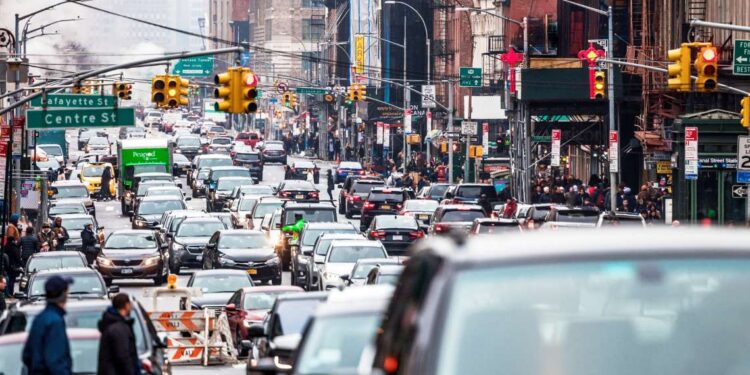
New York state is significantly toughening its penalties for traffic violations starting Monday, implementing a revamped point system that targets high-risk behaviors and extends how long infractions haunt a driver’s record.
The New York State Department of Motor Vehicles (DMV) announced that beginning Feb. 16, several major violations will see steep point increases. Most notably, alcohol and drug-related driving incidents, which previously carried zero points because they were handled as separate criminal offenses, will now result in an immediate 11 points which is the threshold traditionally used for license suspension review.
“These updated regulations will have no impact on drivers who follow the rules of the road, but they will have a big impact on dangerous drivers and repeat offenders,” DMV Commissioner Mark J.F. Schroeder said in a statement. “Our job is to make sure that New York’s roads are safe for everyone.”
Key Changes to the Point System
Under the new rubric, the DMV is expanding its “look-back” period. Points will now remain active on a driver’s record for 24 months, up from the previous 18-month window.
Several common violations have also been reassigned higher values:
| Violation | Old Points | New Points (as of Feb. 16) |
| DWI / DWAI (Alcohol or Drugs) | 0 | 11 |
| Aggravated Unlicensed Operation | 0 | 11 |
| Passing a Stopped School Bus | 5 | 8 |
| Speeding in a Construction Zone | Varies | 8 |
| Speed Contests and Races | 0 | 5 |
| Leaving Scene of Personal Injury | 3 | 5 |
| Over-height Vehicle/Bridge Strike | 0 | 8 |
Earlier Interventions
The state is also lowering the bar for administrative action. While the 11-point threshold remains the standard for potential suspension, drivers will now receive “warning letters” once they accumulate 4 to 6 points within a two-year period. Those reaching 7 to 10 points may be required to attend a mandatory driver improvement clinic.
Safety advocates, including AAA Northeast, have praised the move, particularly the increased penalties for passing school buses and work-zone violations. However, some critics argue the changes – specifically the inclusion of points for equipment violations like broken taillights (1 point) and illegal U-turns (2 points) – will disproportionately affect low-income drivers.
The DMV system underwent a massive upgrade over the weekend to prepare for the transition. All in-person and online services were suspended starting Friday afternoon and are scheduled to resume Wednesday, Feb. 18.