




















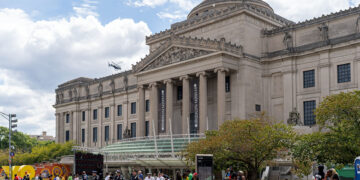
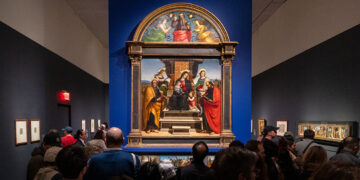



I stepped into the grand, hushed corridors of The Metropolitan Museum of Art this morning expecting the usual reverence that accompanies a blockbuster show, but I found something far more kinetic instead. Raphael: Sublime Poetry is not merely a collection of masterpieces; it is a long overdue homecoming for the artist once hailed as the prince of painters. Despite his status as a pillar of the High Renaissance, this is the first comprehensive retrospective of his work ever held in the United States, and the wait has proven entirely worth it.
The exhibition, curated with a meticulous hand by Carmen Bambach, spans the entirety of the short but incandescent life of Raffaello Santi. It follows a chronological path beginning in the courtly atmosphere of Urbino and moving through the competitive air of Florence before culminating in the grand papal chambers of Rome. What struck me immediately was the sheer scale of the undertaking, with over 200 works on display including some 170 drawings that make the show feel like an intimate conversation with a genius who never seems to have had a bad day at the office.
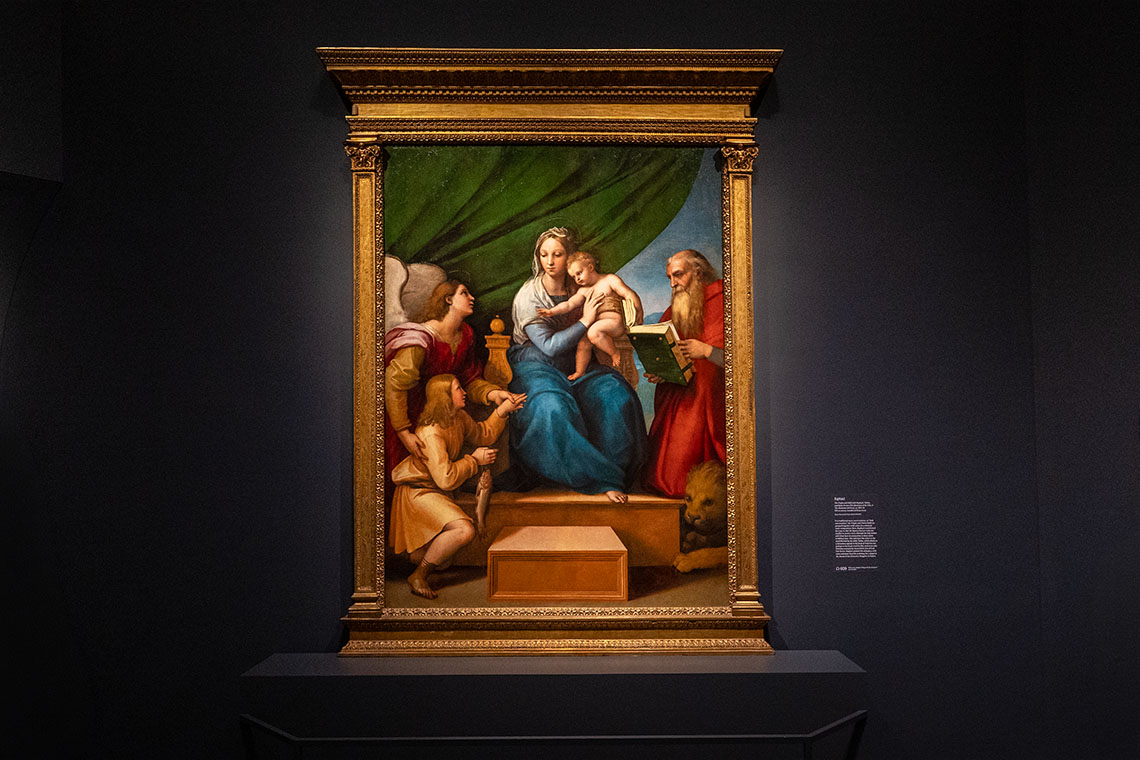
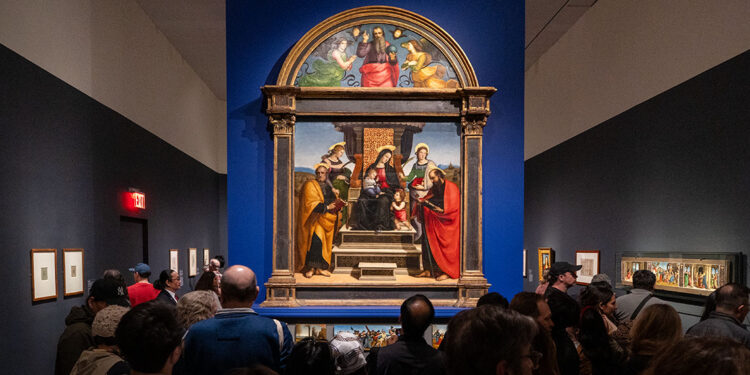
The title of the show is no marketing gimmick. Raphael was the son of a poet and he composed sonnets himself, but his true poetry was visual. In the early sections, his drawings reveal a mind that was constantly refining and searching for a particular brand of grace that his contemporaries called sprezzatura. This is a studied nonchalance that makes the difficult look effortless. One particular reunion stopped me in my tracks where the museum has managed to bring together The Alba Madonna from the National Gallery of Art with its preparatory sketches from Lille. Seeing the final painting, a circular marvel of geometric harmony and tender emotion, alongside the frantic chalk marks that birthed it is a rare privilege. It reminds us that Raphael was not just a conduit for the divine but a disciplined worker who obsessed over the curve of a neck or the fold of a cloak.
Other highlights command equal attention. The Portrait of Baldassare Castiglione, on loan from the Louvre, serves as the definitive image of the Renaissance gentleman with a softness of fur and an empathetic gaze that are even more arresting in person. Nearby, the Portrait of a Lady with a Unicorn from the Galleria Borghese captures the enigmatic elegance Raphael could conjure with a single brushstroke. Since the famous frescoes of the Stanza della Segnatura cannot travel, the museum has created a digital room where the murals are projected onto the walls to provide a necessary sense of scale for the surrounding sketches.
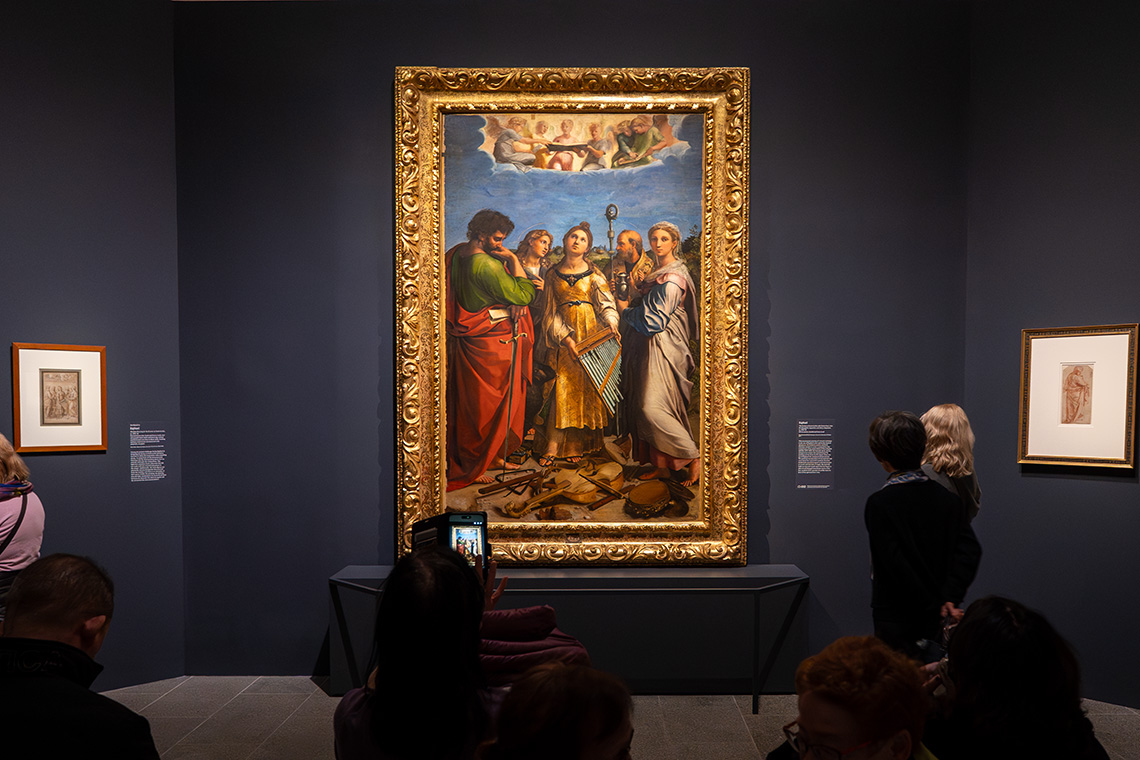
There is a modern tendency to prefer the tortured shadows of Leonardo or the muscular angst of Michelangelo. Raphael, by contrast, was affable, productive, and died at the peak of his fame at only 37 years old. Because he lacked the tortured artist persona, his reputation has occasionally suffered from the false accusation of being too perfect or too easy. This exhibition corrects that narrative. As I moved into the final rooms which feature three massive tapestries designed for the Sistine Chapel, the sheer power of his ambition became undeniable. These are not merely decorative objects but grand dramas of human expression.
The show ends with a nod to his final decade in Rome where he ran a studio so efficient and influential that it essentially set the template for the modern artistic workshop. Even in his most commercial moments, that sublime poetry remains. For those planning a visit, the exhibition runs through June 28, 2026. It is best to arrive early, as the crowds for the Alba Madonna form quickly and you will want space to appreciate the delicate silverpoint drawings that act as the true heartbeat of this show.