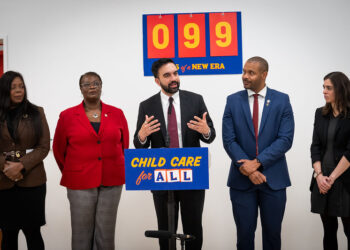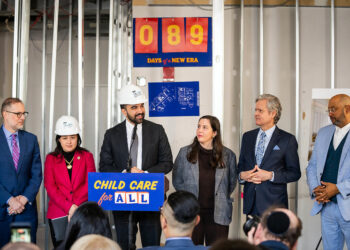
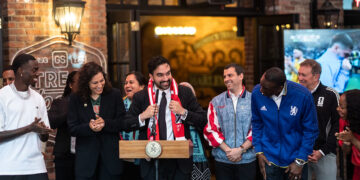


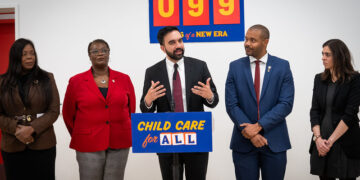

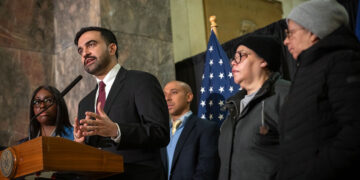





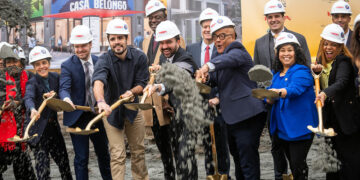
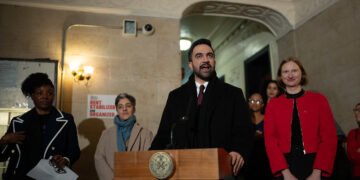

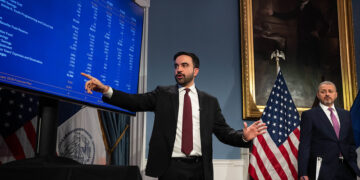




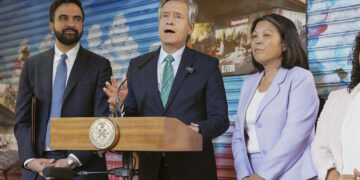

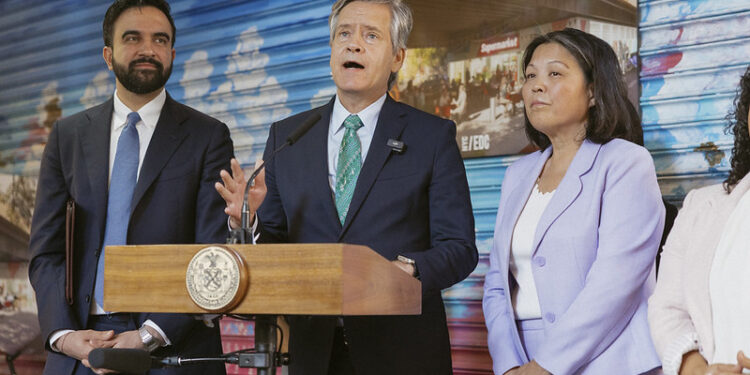
Standing in the shadow of the Park Avenue Viaduct where Mayor Fiorello La Guardia once stood during the Great Depression, Mayor Zohran Mamdani announced on Tuesday that East Harlem would become the testing ground for his most ambitious economic policy: a city owned public grocery store.
The historic public market known as La Marqueta has been identified as the first site for a municipally funded network of supermarkets intended to combat what the administration calls a cost of living crisis. The project, which the mayor described as a “grand experiment,” aims to place at least one public grocery store in every borough by the end of 2029.
“At our stores, eggs will be cheaper. Bread will be cheaper,” Mr. Mamdani said to a crowd of residents and local officials. “Grocery shopping will no longer be an unsolvable equation.”
The initiative arrives as food costs in New York City continue to outpace the rest of the country. According to city data, grocery prices in the five boroughs rose nearly 66 percent between 2013 and 2023. The administration plans to allocate $70 million in capital funds for the program, with 30 million dedicated to the 9,000 square foot East Harlem location.
A Model of Public Ownership
Unlike traditional supermarkets, the city will retain ownership of the land and cover overhead costs such as rent and construction. While a private operator will be selected this summer to manage daily operations, they will be contractually bound to price caps on a “core basket” of essential goods.
The location is strategic. Officials noted that 65,000 New Yorkers live within a ten minute walk of La Marqueta, including 5,000 residents of public housing. In East Harlem, roughly 40 percent of the population relies on SNAP benefits or other public assistance.
“If New Yorkers cannot afford to eat, government cannot look away,” said Julie Su, the Deputy Mayor for Economic Justice. Ms. Su noted that 62 percent of city residents currently struggle to afford the “real cost of living,” which includes basics like medicine and food.
Echoes of the 1930s
The choice of La Marqueta is a deliberate invocation of history. Established in 1936, the market was originally created by Mayor La Guardia to bring pushcart vendors under one roof and provide affordable food to working class families during the economic collapse of the thirties.
“Just as La Guardia used government to respond to the challenges of the Great Depression, we will use government to respond to rising prices,” Mr. Mamdani said.
Local Pushback
The plan has not been met with universal acclaim. Small business advocates and the United Bodegas of America have voiced concerns that a government subsidized competitor could drive local shops out of business.
“Bodega owners are not ripping people off,” said Francisco Mateo, a spokesperson for the group. “What we need is help from the mayor, not competition from the city.”
Critics also questioned the scalability of the plan, noting that five stores would be a drop in the bucket for a city of eight million people. However, supporters like Council Member Yusef Salaam argued the move is a necessary step toward food sovereignty. “This is about putting the power back in the people,” Mr. Salaam said.
The city expects the La Marqueta store to open its doors by late 2027, following a procurement process to find a management partner that meets the administration’s labor and pricing standards.