



















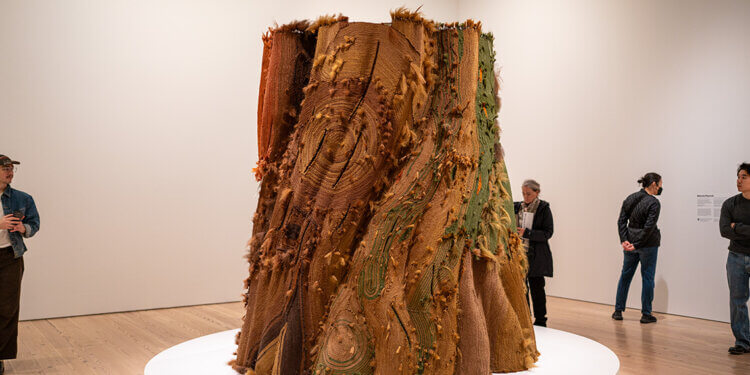
The Whitney Biennial has long served as a Rorschach test for the American psyche. Every two years, the Whitney Museum of American Art attempts the impossible task of capturing the nation in a single exhibition. This year, the eighty-second edition of the survey arrives not with a grand manifesto but with a collective sigh and a sharp intake of breath.
Organized by curators Marcela Guerrero and Drew Sawyer, the 2026 Biennial features fifty-six artists, duos, and collectives. It is a show that explicitly rejects a singular title or a rigid theme. Instead, the curators have opted to follow the currents of “relationality,” a term that encompasses everything from family bonds and technological glitches to the messy overlap of geopolitics and ecology.
A Survey of Atmospheric Tensions
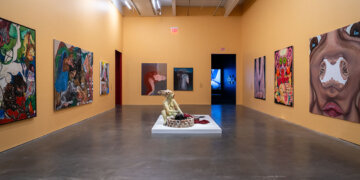
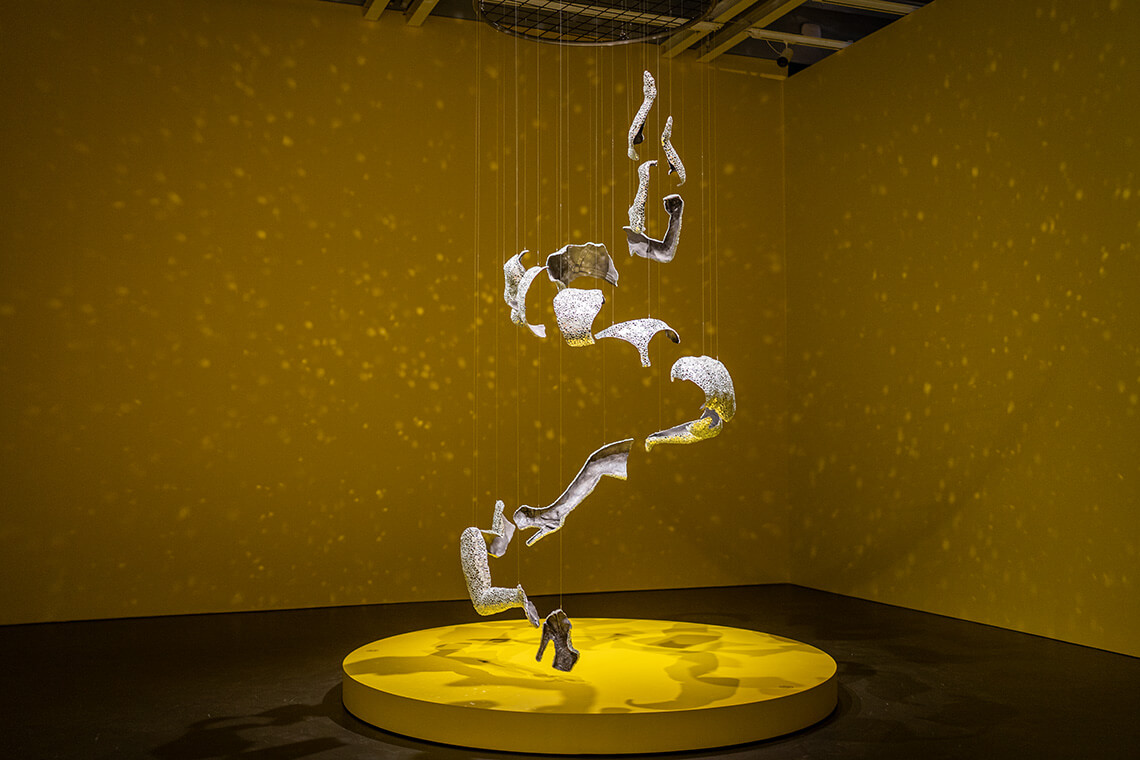
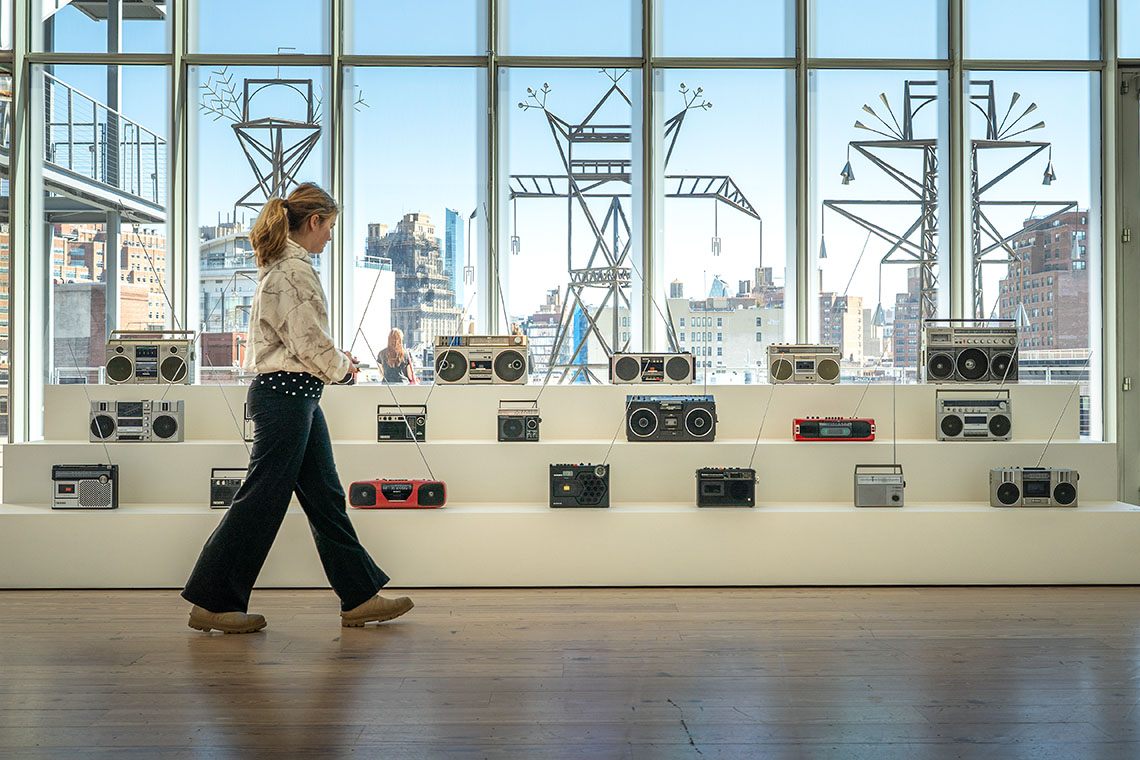
If previous biennials felt like shouting matches, this one feels like a series of intense, whispered conversations. The exhibition focuses heavily on mood and texture. Visitors do not find a neat summary of the political moment but rather an environment of “tension, tenderness, and unease.” It is a sprawled, sensorial experience where the absence of traditional painting is replaced by immersive soundscapes, digital consoles, and unconventional sculptures.
The curators conducted more than three hundred studio visits, looking past the borders of the United States to include artists from places where American influence has left a permanent mark, such as Afghanistan, Iraq, and the Philippines. The result is a Biennial that views “America” as an abstract, often violent entity that cannot be contained by simple lines on a map.
Notable Artists and Standout Works
Among the most moving entries is Kelly Akashi’s “Monument (Altadena)” (2026). On the fifth floor terrace, Akashi has erected a ghostly replica of a chimney made from cast glass bricks. It is a literal reconstruction of the only part of her California home that remained standing after the devastating wildfires of 2025. The work stands as a luminous, fragile witness to loss and the persistence of memory.
In another gallery, Emilie Louise Gossiaux presents “Kong Play,” a vast installation of one hundred handmade ceramic sculptures. These colorful, bulbous objects are replicas of a dog toy favored by London, the service dog of the artist. Gossiaux, who lost her sight in 2010, created the work as a tribute to her late companion, imagining an afterlife where joy is as simple as a favorite toy.
The exhibition also highlights a fascinating creative kinship between Andrea Fraser and her mother, Carmen de Monteflores. De Monteflores, now in her nineties, shows bold, graphic paintings from 1969. These are placed alongside Fraser’s series of wax toddlers from 2024. The juxtaposition creates a bridge between generations, exploring the fragile nature of care and domesticity.
Other highlights include:
- Agosto Machado: The veteran of the underground gay performance world presents “Altars,” intricate and deeply personal shrines dedicated to queer icons like Peter Hujar and Marsha P. Johnson.
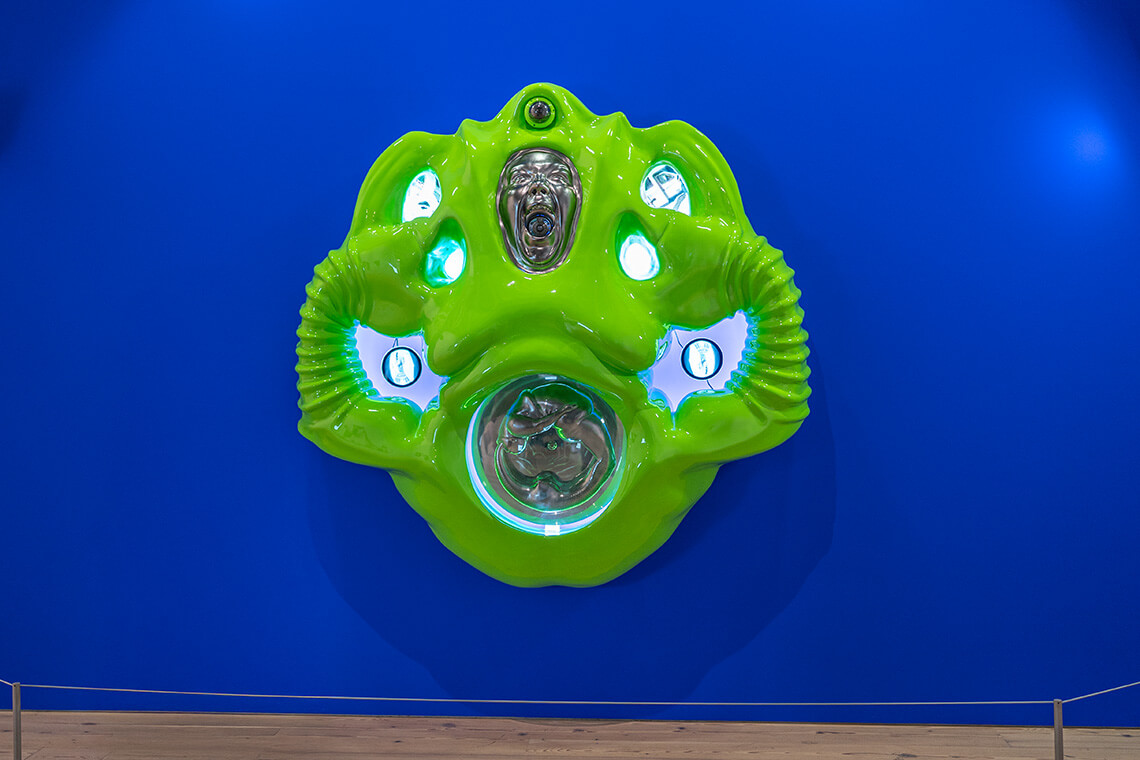
- Zach Blas: An apocalyptic installation that uses artificial intelligence to explore fantasies of tech industry domination, featuring a standalone ground floor gallery that hums with digital anxiety.
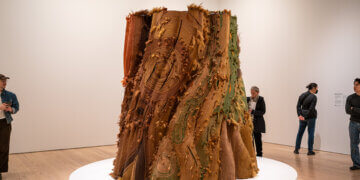
- Raven Halfmoon: Towering ceramic figures, including the nine foot tall “Too Ancient to Care,” greet visitors with a sense of Indigenous resilience and monumental weight.
- Mao Ishikawa: The Japanese photographer contributes searing images from Okinawa that trace the lives of those living in the shadow of American military bases.
The Full List of Participants
The 2026 roster reflects a deeply diverse and intergenerational group of creators:
Basel Abbas and Ruanne Abou-Rahme, Kelly Akashi, Kamrooz Aram, Ash Arder, Teresa Baker, Sula Bermudez-Silverman, Zach Blas, Enzo Camacho and Ami Lien, Leo Castañeda, CFGNY, Nanibah Chacon, Maia Chao, Joshua Citarella, Mo Costello, Taína H. Cruz, Carmen de Monteflores, Ali Eyal, Andrea Fraser, Mariah Garnett, Ignacio Gatica, Jonathan González, Emilie Louise Gossiaux, Kainoa Gruspe, Martine Gutierrez, Samia Halaby, Raven Halfmoon, Nile Harris with Dyer Rhoads, Aziz Hazara, Margaret Honda, Akira Ikezoe, Mao Ishikawa, Cooper Jacoby, David L. Johnson, kekahi wahi, Young Joon Kwak, Michelle Lopez, José Maceda, Agosto Machado, Oswaldo Maciá, Emilio Martínez Poppe, Isabelle Frances McGuire, Kimowan Metchewais, Nour Mobarak, and others.
In a world that feels increasingly fragmented, the 2026 Whitney Biennial suggests that the only way forward is to acknowledge the “misfit” nature of our existence. It is an exhibition that does not provide answers but instead invites us to stay in the tension of the present, lingering in the ghostly glow of glass chimneys and the memory of old songs.