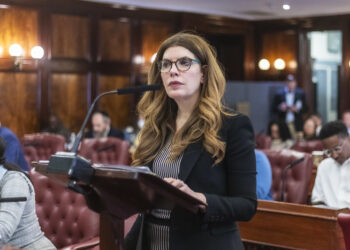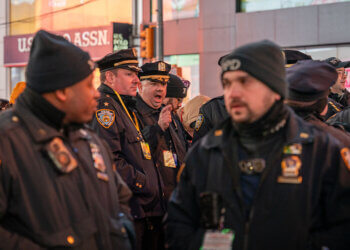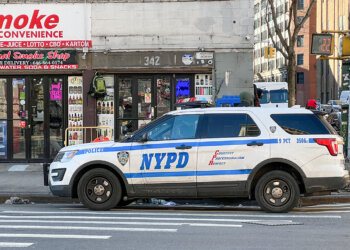

















































As New York City prepares to welcome a new mayor in 2026, one of the defining achievements of Mayor Eric Adams’s tenure has been a sustained reduction in violent crime and a focus on removing illegal firearms from city streets. Through coordinated policing strategies, community partnership programs and targeted enforcement, the city has reported historic lows in shootings and homicides, a milestone that city officials highlight as central to improving the quality of life for residents across the five boroughs.
Adams and NYPD Commissioner Jessica S. Tisch said the department has seized more than 25,000 illegal guns since the start of the Adams administration in January 2022. More than 5,200 of those firearms were removed in 2025 alone, part of an aggressive focus on reducing gun violence. Officials attribute the steep decline in violent incidents to this sustained effort to get illegal weapons off the streets.
Those enforcement efforts appear to have had measurable impact. According to city data, shooting incidents are down by approximately 55 percent and homicides by about 35.5 percent since Adams took office. In particular, the first eleven months of 2025 set records for the lowest number of shooting incidents and shooting victims ever recorded in an 11-month span, beating a previous low from 2018.
Other major crime categories have also seen notable reductions. NYPD figures show that overall crime was down by double digits in multiple categories through early 2025, including significant drops in transit crime and major felonies compared with the same period the previous year. In February 2025, the city recorded the fewest shooting incidents in over 30 years, with violent crime falling across key indexes, according to NYPD reports.
Adams’s strategy combined traditional law enforcement with expanded recruitment and data driven deployment. Early in his administration, he directed the NYPD to add new police recruits and launch specialized teams focused on high violence areas. These efforts, paired with innovative programs such as the Fall Violence Reduction Plan, which placed officers in targeted zones across the city, were credited with helping reduce both shootings and broader index crimes.
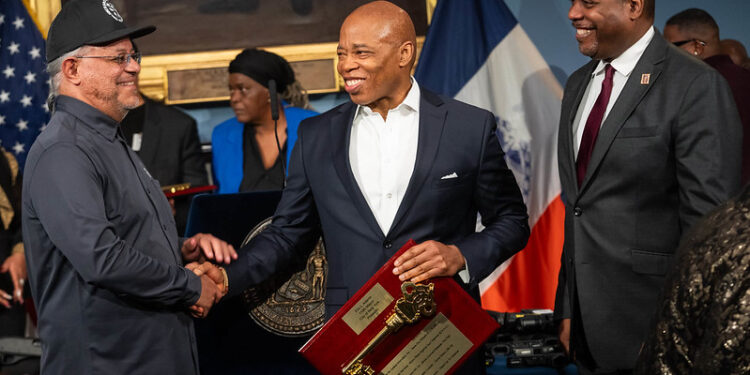
But the mayor’s approach did not rely solely on policing. Adams also invested in community based violence prevention through the city’s Crisis Management System, a network of organizations and mediators working to prevent conflicts before they erupt into violence. During the late-December announcement, Adams awarded the Key to the City to 29 such organizations that collaborate with the NYPD and social services to address root causes of violence and engage youth at risk.
The focus on public safety was part of a broader agenda that sought to make New York City not just safer but more livable and prosperous. In a mid year report, the city highlighted reductions in crimes beyond shootings, including declines in auto theft, burglary and transit crime, and emphasized integrated strategies that combined enforcement with community solutions.
Still, crime trends remain part of an ongoing conversation. While violent incidents have declined, overall major felonies have not uniformly dropped, and community advocates continue to emphasize the importance of equitable enforcement and addressing disparities in policing. Yet the data from the past several years include significant gun seizures, lower homicide rates and historic lows in certain crime categories, underscore a period in which public safety was elevated as a defining issue of Adam’s governance.
As Mayor Eric Adams leaves office, his administration’s work on crime reduction stands as one of its most visible legacies and any change in crime statistics will be closely watched when Zohran Mamdani takes office in 2026.