

















































New York City’s subway system is on track to record its lowest level of crime in a generation in 2025, a milestone announced this week by Governor Kathy Hochul, marking a major shift in public safety on the transit network. The decline comes as ridership rebounds strongly, suggesting that the city’s long effort to make subways safer is having measurable results.
According to the governor’s office, overall major crime in the subway system is down about 14.4 percent compared to 2019, the last full year before the pandemic, and down 5.2 percent from 2024. When adjusting for increased ridership, major crime incidents per million riders have fallen roughly 30 percent since 2021, bringing 2025 crime rates near levels not seen since 2009.
The announcement highlights a sustained collaboration between state, city and transit authorities, including the New York Police Department and the Metropolitan Transportation Authority. In 2022 Governor Hochul and former Mayor Eric Adams launched a joint safety initiative focused on more uniformed patrols, expanded camera coverage and new outreach teams trained to address mental health crises in the system. This strategy of what officials describe as “cops, cameras and care” has continued into the current year and is credited with driving down crime even as millions more riders return to the trains.
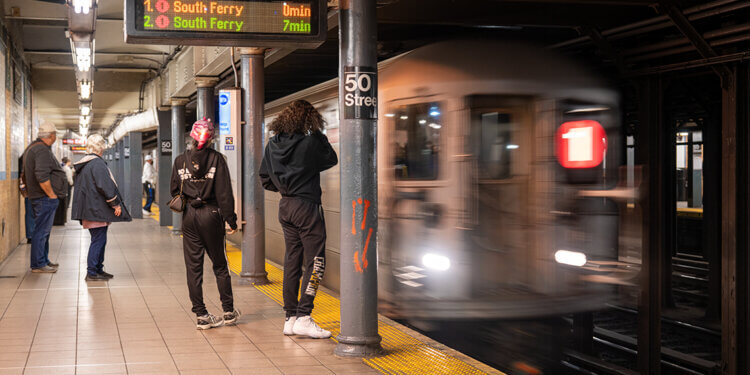
Subway ridership itself has been climbing all year. In December the city broke multiple post-pandemic ridership records, including days with more than 4.5 million riders and weekends with more than 3.2 million riders. Officials say this rise in use as safety improves reinforces confidence in the transit system as reliable everyday infrastructure for New Yorkers.
The decline in crime has also been reflected in rider sentiment. Customer surveys conducted by the MTA show that the share of riders who say they feel safe has increased sharply, reaching record highs in late 2025, and overall satisfaction with the subway system has risen significantly compared to earlier years.
Governors office announcements also point to specific efforts that helped drive results. More than 32,000 security cameras now monitor subway cars and stations, platform barriers have been installed at over a hundred stations to reduce risk, and brighter LED lighting is nearing completion across the network. Additionally, ten subway co-response outreach teams are pairing law enforcement with trained clinicians to provide humane responses to severe mental health situations encountered in the transit system.
To build on this success, the state announced another $77 million commitment for enhanced NYPD transit patrols in 2026, aimed at maintaining officer presence where it is most needed. Officials stress that continuing safety improvements will require sustained cooperation across state, city and community stakeholders.
While agencies acknowledge that even one incident is too many, the downward trend suggests that New York’s subways are becoming safer for daily commuters, weekend riders and transit workers alike. As crime falls and ridership rises, transit leaders are hopeful that the system is entering a more secure and confident era.