













In the dim, protective lighting of the Metropolitan Museum of Art, a tiny, painted unicorn demands an unusual amount of gravity. The creature sits, no larger than a handheld mirror, in the lap of a blonde noblewoman whose serene, clear eyes have traveled five centuries from Rome to New York. For decades, this creature in Raphael’s Portrait of a Young Woman with a Unicorn, painted circa 1505 to 1506, was buried beneath layers of overpainting, hidden under a wheel and a heavy cloak added by a later artist to transform the subject into Saint Catherine. Restored in the twentieth century to its original, enigmatic purity, the canvas now serves as an apt metaphor for the artist himself, an extraordinary talent frequently obscured by the calcified expectations of history.
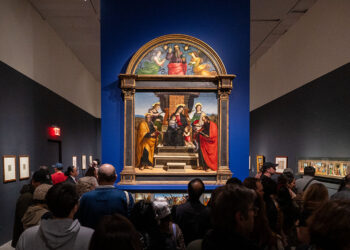
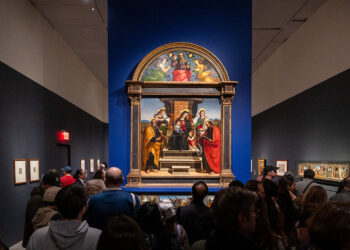
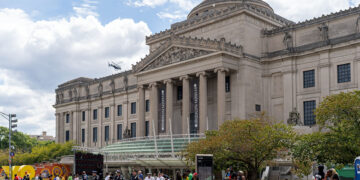
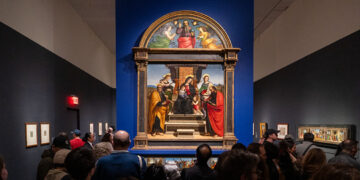
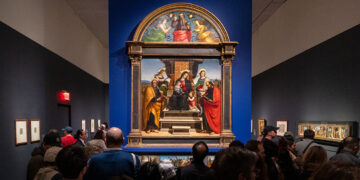
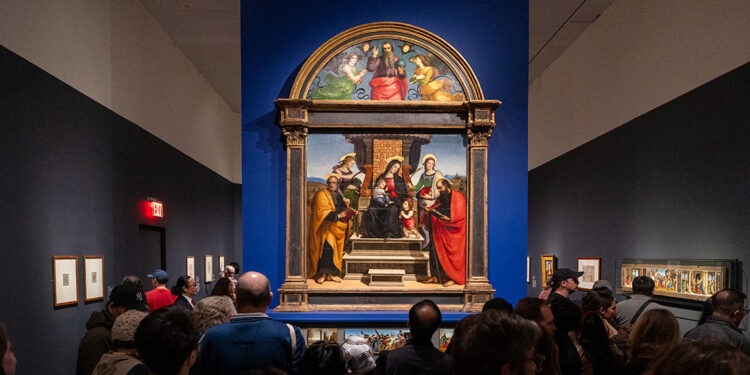
The painting is a centerpiece of “Raphael: Sublime Poetry”, on view through June 28, 2026. Shockingly, given the artist’s foundational stature in Western art, the exhibition marks the first comprehensive retrospective dedicated to Raphael, or Raffaello di Giovanni Santi, ever mounted in the United States. Comprising more than 200 works, including over 170 from Raphael’s own hand, the show arrives not merely as a celebration, but as a deliberate curatorial intervention.
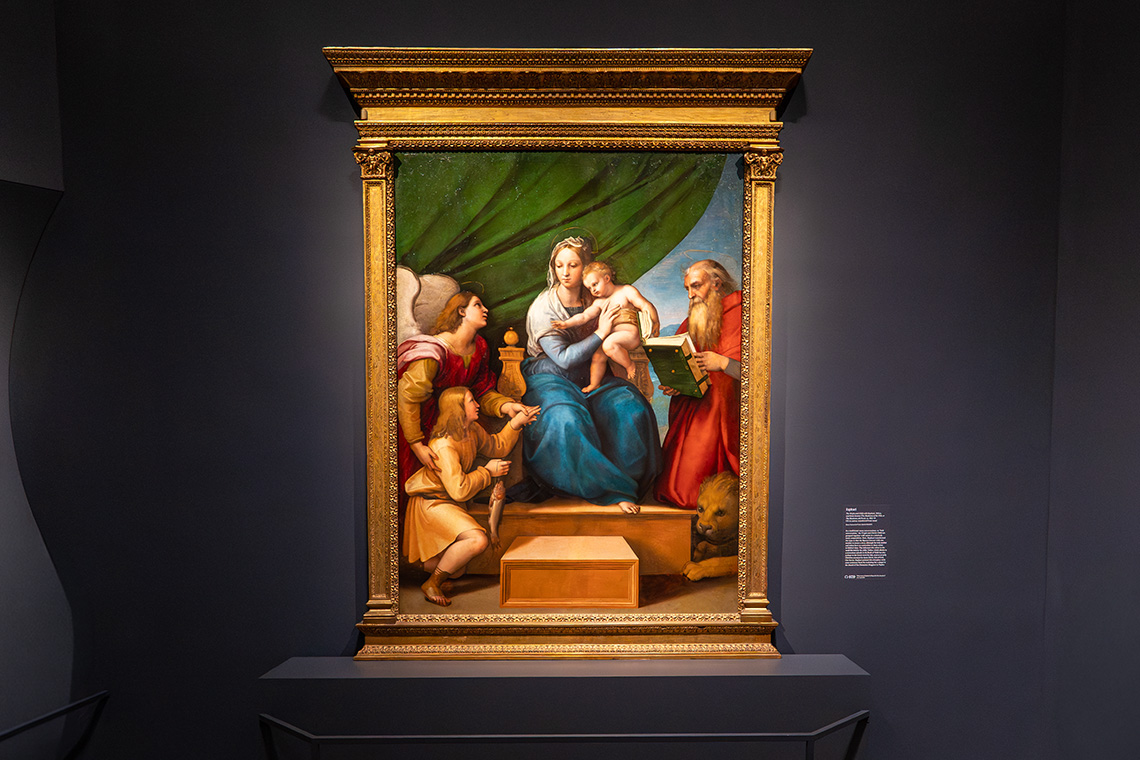
For centuries after his sudden death at age 37, Raphael was considered the absolute pinnacle of artistic perfection, the Prince of Painters who successfully harmonized the intellectual rigor of Leonardo da Vinci with the muscular dynamism of Michelangelo. Yet in the modern era, that very harmony has sometimes worked against him. To an age that romanticizes the tortured, isolated eccentric, Raphael’s affable nature, social fluency, and seemingly effortless grace can read as slick, even institutional. He has occasionally slipped into a distant third place in the popular imagination, trailing behind his more volatile contemporaries.
The exhibition aims to restore Raphael’s place alongside da Vinci and Michelangelo as an equal, and not in third place, notes Carmen C. Bambach, the Met’s curator of Italian Renaissance prints and drawings, who spent years shepherding this landmark project to completion. By focusing heavily on Raphael’s drawings as the bedrock of his creative intellect, the exhibition successfully strips away the varnish of centuries of academic reverence. What emerges is not a passive producer of idealized beauty, but a restless, fiercely ambitious mind negotiating the complex, often treacherous landscape of Renaissance papal courts.
The exhibition unfolds with a rigorous chronological clarity, tracing the artist’s meteoric trajectory across three distinct geographic and stylistic chapters. The journey begins with Raphael’s youth in the courtly culture of Urbino, where he trained under his father, Giovanni Santi, and later apprenticed with Perugino. Early devotional works demonstrate an immediate mastery of Perugino’s sweet forms, but quickly hint at something more grounded, showing faces that feel truly alive and distinct.
In the central galleries, visitors witness the artist’s dramatic transformation in Florence, where he absorbed the complex geometries of Leonardo and the anatomical intensity of Michelangelo. Masterpieces like The Alba Madonna, on a rare loan from the National Gallery of Art in Washington, showcase his unique ability to turn rigorous compositional mathematics into scenes of profound, liquid tenderness. The exhibition culminates in his final, breathless decade in Rome under Popes Julius II and Leo X, where Raphael functioned less like a solitary painter and more like a visionary director of a vast artistic enterprise, designing everything from architecture to tapestries.
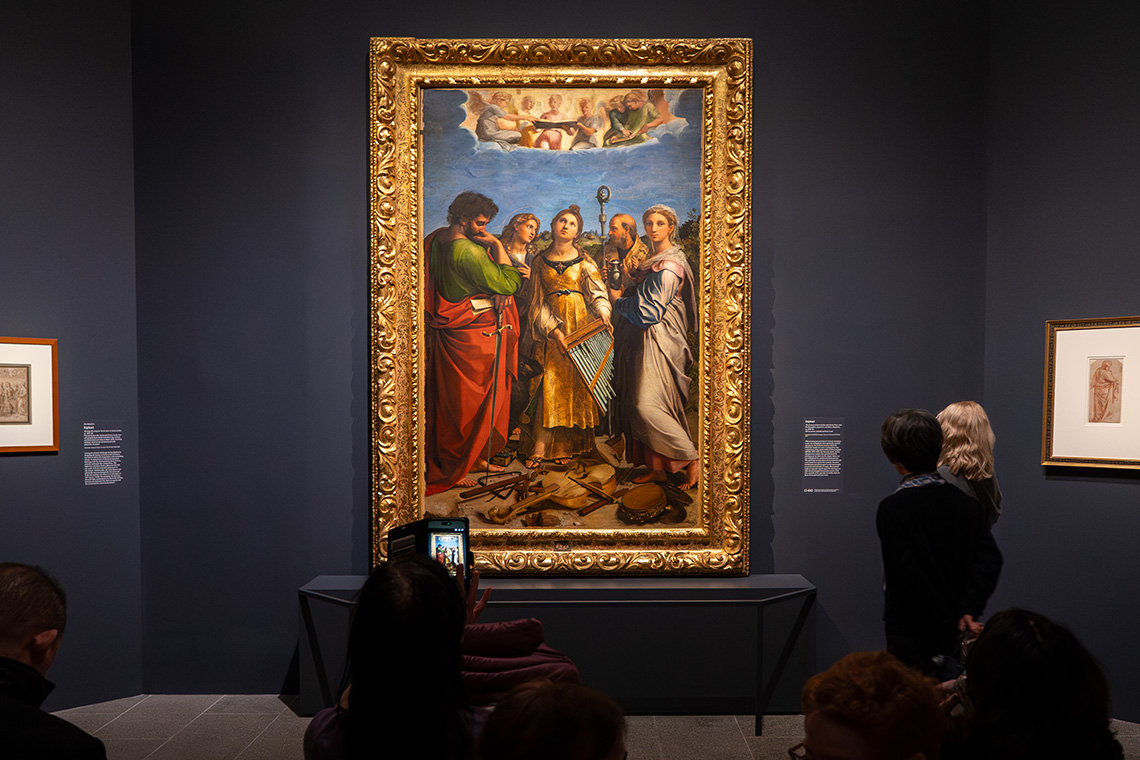
Any monographic exhibition of Raphael must eventually confront an insurmountable wall, given that his greatest masterpieces are unmovable frescoes permanently bound to the plaster of the Vatican rooms. To bypass this limitation without reducing the show to a series of disconnected fragments, the Met introduces a dedicated gallery featuring high resolution digital projections of the papal chambers. In less capable hands, such digital interventions can feel like a concession to the hollow spectacles of contemporary immersive entertainment. Here, however, the digital rooms are anchored by adjacent galleries filled with Raphael’s preparatory sketches, including his only known drawing of a horse and meticulous anatomical studies for The School of Athens. The proximity allows the digital space to function as a tool of translation rather than a substitute for the real, letting visitors look at the sharp, red chalk stroke where Raphael first figured out how to angle a prophet’s elbow.
If there is a critique to be made, it lies in the sheer density of the presentation. With over 200 objects, the exhibition demands an exhausting level of philosophical and historical attention from its viewers. Yet, the reward is an unparalleled view of an artist who used poetry not merely as a literary pursuit, as he was an accomplished sonneteer, but as an organizing principle for visual form. In an art world that currently prizes fracture, irony, and the raw expression of trauma, “Sublime Poetry” offers a complicated counterargument. It suggests that beauty, when pursued with rigorous intellectual weight and supreme technical mastery, is its own kind of radical act. Raphael’s work does not shout, it persuades, and in the quiet halls of the Met, that persuasion remains as potent as ever.