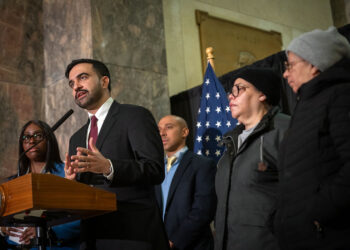





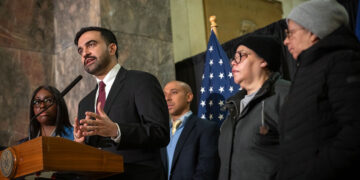

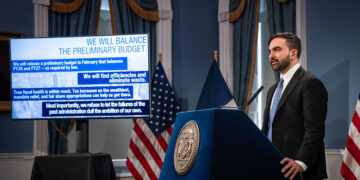



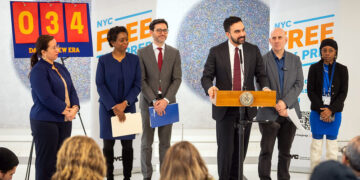

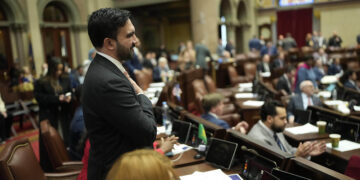


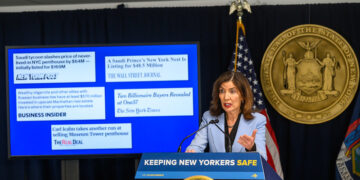
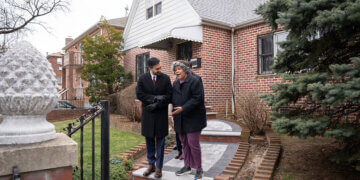


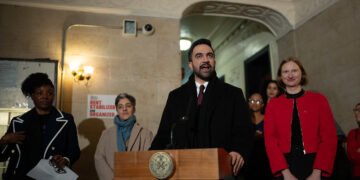



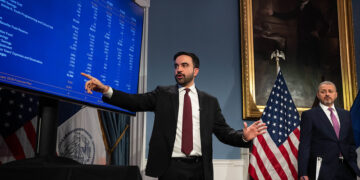
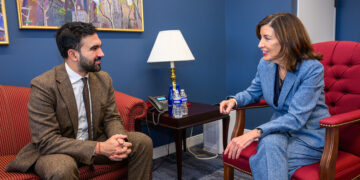

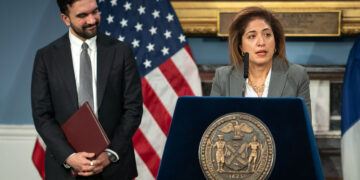












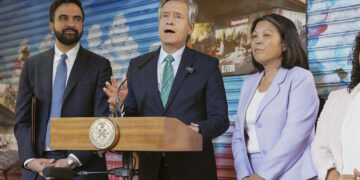



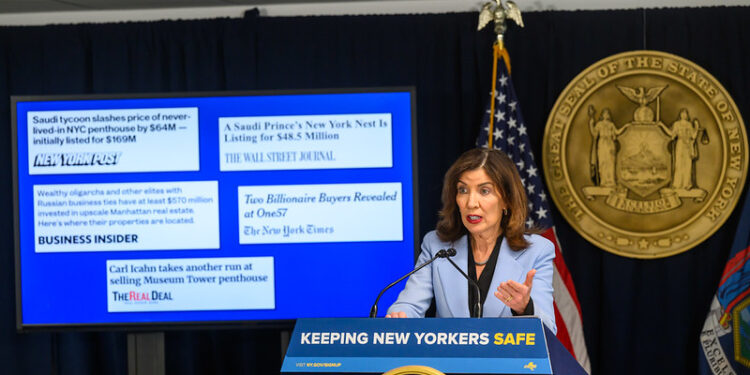
In a rare alignment of political wills that bridges the gap between centrist Albany and a newly radicalized City Hall, Governor Kathy Hochul and Mayor Zohran Mamdani announced a joint effort Wednesday to impose the first tax in the state on luxury second homes. The proposal, which targets properties in New York City valued at $5 million or more, represents a significant victory for the nascent Mamdani administration as it seeks to close a $5.3 billion budget deficit just months after the mayor took office.
The surcharge, often referred to as a pied-à-terre tax, is designed to ensure that wealthy individuals who maintain seasonal residences in the city contribute more robustly to the municipal services they utilize. According to the governor, the measure is expected to generate at least $500 million in annual revenue. In a statement delivered on Wednesday, Governor Hochul said, “If you can afford a $5 million second home that sits empty for most of the year, you can afford to contribute like every other New Yorker.”
The partnership marks a shift for Governor Hochul, who has historically resisted broad tax increases on the wealthy. However, the pressure of the city fiscal crisis and the political ascent of Mr. Mamdani, a democratic socialist who recently celebrated his first 100 days in office, appears to have moved the needle in the state capital. Mayor Mamdani, who campaigned on a platform of taxing the rich to fund public services like city run grocery stores and free bus transit, hailed the proposal as a step toward balancing the budget at the expense of global elites rather than the working class. “This is about basic fairness,” Mayor Mamdani said. “For too long, the wealthiest among us have treated New York real estate as a bank account while our neighbors struggle to pay rent.”
Critics were quick to denounce the plan as a threat to the real estate market of the city. Bruce Blakeman, the Nassau County Executive and the Republican nominee for governor in the upcoming election, called the proposal “a war on homeownership.” Mr. Blakeman argued that the promise of the governor to avoid tax hikes has expired and suggested that the policy would drive affluent residents out of the state entirely. Despite such opposition, the proposal has gained traction among housing advocates who argue that using real estate as a vehicle for wealth storage has exacerbated the affordability crisis for regular tenants.
The details of the tax are still being finalized as part of the late state budget negotiations. Officials indicated that the surcharge would apply to one to three family homes, condominiums, and cooperatives that do not serve as the primary residence of the owner. While the exact percentage of the levy remains a subject of debate, the agreement signals a new era of cooperation between the governor and the mayor, two leaders who have spent much of the year navigating their ideological differences. For Mr. Mamdani, the tax is more than a fiscal tool; it is a fulfillment of a central campaign promise to make the city belong to more of its people.