













































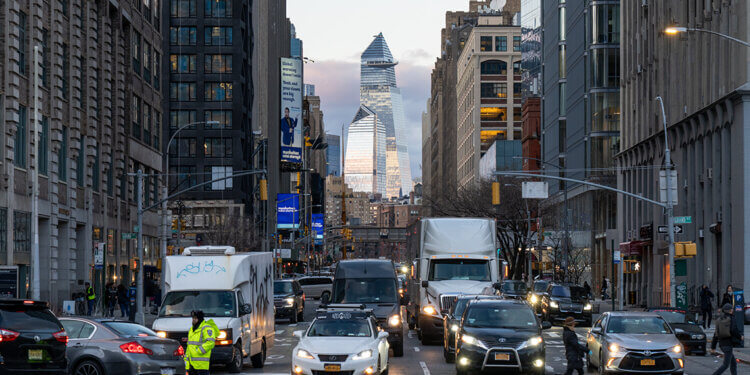
New York City’s congestion pricing program, launched earlier this year, is delivering measurable gains in cleaner air across the city and its surrounding suburbs, according to a new study from Cornell University. The research is one of the first comprehensive evaluations of the program’s environmental impact and offers strong evidence that traffic reduction strategies can significantly improve public health.
The Cornell report analyzed air quality data collected throughout the city and nearby counties in the months following the program’s start. Researchers found that the reduction in vehicle traffic entering the central business district has already led to a clear drop in harmful pollutants. Fine particulate matter, also known as PM2.5, declined by an average of nearly eight percent in neighborhoods closest to the toll zone. Nitrogen dioxide levels also fell by more than six percent, reflecting fewer gasoline powered vehicles idling in traffic.
These improvements were not limited to Manhattan. The study found better air quality in parts of Queens, Brooklyn, the Bronx, and even suburban regions such as Nassau and Westchester Counties. According to Cornell researchers, the redistribution of traffic and a smaller overall number of cars entering the city created cleaner air across the wider region.
Researchers emphasized the health benefits associated with these declines in pollution. Lower levels of PM2.5 and nitrogen dioxide are strongly linked to fewer asthma attacks, reduced cardiovascular strain, and long term improvements in community health outcomes. The report estimates that if these trends continue, New York City could prevent hundreds of pollution related hospital visits each year.
The study provides early confirmation that congestion pricing is working as intended. By reducing traffic volumes, the program is delivering cleaner air, improving public health, and advancing the city’s long standing environmental goals. It also adds important real world evidence to the national conversation about how American cities can tackle pollution and traffic at the same time.
As more data becomes available in the coming year, researchers expect to measure even greater improvements. For now, the Cornell findings offer a meaningful sign that cleaner and healthier streets are already becoming a reality for millions of New Yorkers.