

















































For the thousands of New Yorkers who rely on their vehicles to navigate the city’s sprawl, the morning commute has suddenly become a math problem with no easy solution.
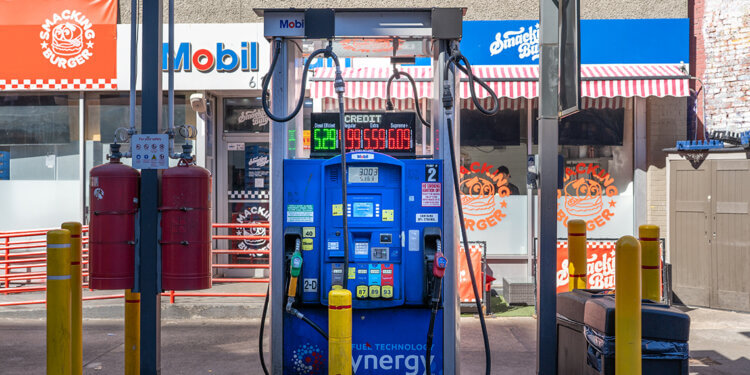
Following the outbreak of hostilities between a U.S.-led coalition and Iran late last month, global oil prices have vaulted past $100 a barrel for the first time since 2022. The ripple effect arrived at the five boroughs this week with jarring speed. At gas stations from the North Shore of Staten Island to picturesque North Riverdale in the Bronx, prices that hovered near $3.00 just ten days ago have surged, with regular unleaded now averaging $3.46 across the city.
The spike is more than a statistical anomaly; it is a direct hit to the household budgets of a city already weary of the high cost of living.
“The prices at the pump are going up every day now and it’s starting to get a bit painful,” said John, a resident of Staten Island who spoke while filling his SUV at a Mobil station. For John, the daily trek across the Verrazzano-Narrows Bridge to his job in Flushing, Queens, is a non-negotiable expense. “You try to plan for inflation, but you can’t plan for a war halfway around the world.”
A Global Shock, a Local Toll
The volatility is rooted in the Strait of Hormuz, the narrow waterway through which roughly a fifth of the world’s oil consumption passes. With the strait effectively a combat zone, analysts at the Eurasia Group warned Monday that crude could reach $120 a barrel if tanker traffic remains frozen.
In New York, the pain is compounded by the seasonal transition to “summer blend” gasoline, which is more expensive to produce. According to AAA data, the average price for premium fuel in the city has already climbed to $4.29, while diesel which is the lifeblood of the city’s delivery trucks, is nearing $4.90.
The ‘Lunch or Gas’ Dilemma
While the city’s robust subway system offers an alternative for some, thousands of New Yorkers like Jenny, a resident of Bay Ridge, Brooklyn, find themselves trapped by geography and responsibility.
Jenny makes the cross-borough trip several times a week to care for her elderly mother in the Bronx, a journey that would take over two hours each way by public transit.
“I have to start cutting back on other things like lunch or not having breakfast,” Jenny said, her hand resting on a pump that was clicking toward $60. “It sounds dramatic, but when you’re on a fixed budget and the tank costs an extra $20 a week, that money has to come from somewhere. Right now, it’s coming out of my grocery bag.”
Political Headwinds
The surge has also become a political lightning rod. In Washington, President Trump has sought to downplay the impact, announcing new insurance measures for Persian Gulf shipping, while local Democrats have seized on the “crushing” costs to working families.
For now, New Yorkers are left to adapt. Hybrid vehicle sales are seeing a renewed uptick in the suburbs, and some delivery apps have begun discussing “fuel surcharges” that could soon make a takeout order as expensive as the gas required to deliver it.
As the sun set over a line of cars idling at a BP station in Long Island City, the mood was one of quiet resignation. For a city that never sleeps, the cost of staying in motion has rarely felt so high.