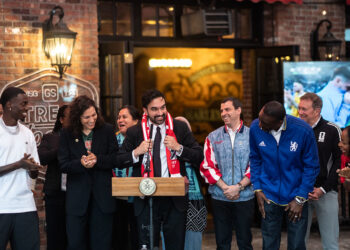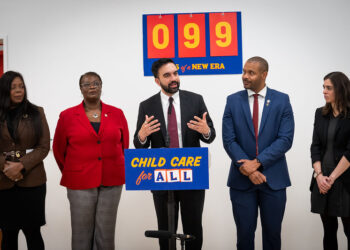



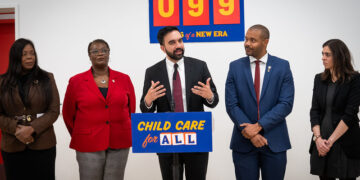


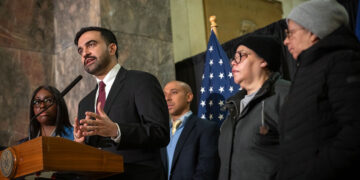

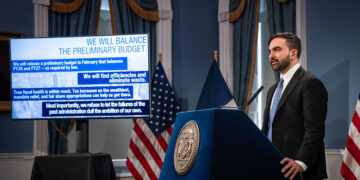



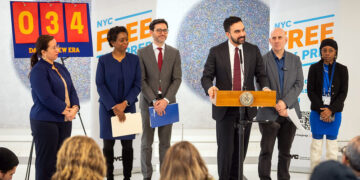

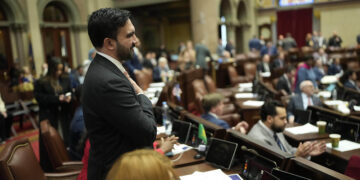




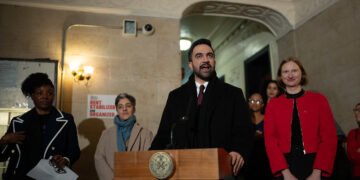
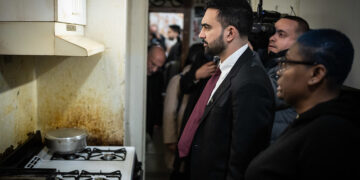


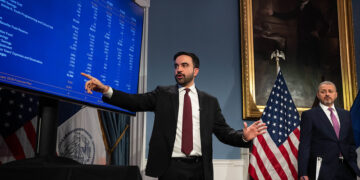
















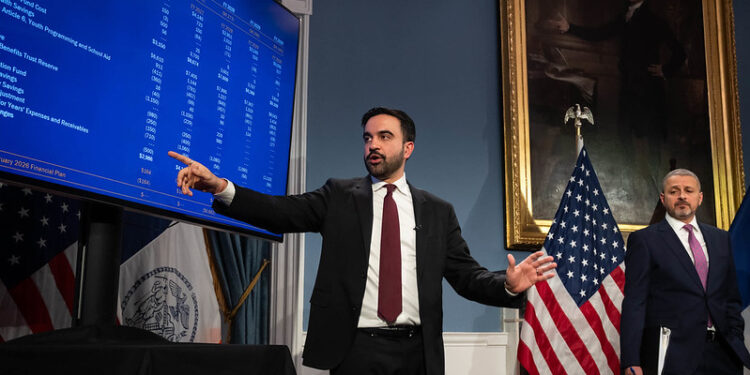
Mayor Zohran Mamdani on Tuesday unveiled a $127 billion preliminary budget for the 2027 fiscal year, a plan that pairs a radical expansion of the city’s social safety net with a blistering indictment of his predecessor’s fiscal record.
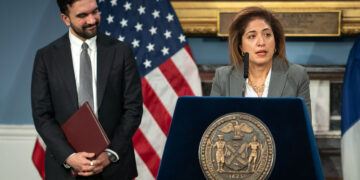
Delivering his first budget address in a packed Blue Room at City Hall, Mr. Mamdani, a democratic socialist who took office last month, characterized a looming $12 billion shortfall not as an economic inevitability, but as a calculated “Adams Budget Crisis.” He alleged that former Mayor Eric Adams had chronically underfunded essential services—including rental assistance, shelter costs, and class-size mandates—to maintain a facade of fiscal health while leaving the city’s finances “on a ledge.”
“For too long, New Yorkers have been misled about the true state of our city’s finances,” Mr. Mamdani said. “We are inheriting a crisis built on a foundation of sand. Today, we begin the work of building on bedrock: a budget that is as honest about our challenges as it is ambitious about our solutions.”
The Mayor’s plan is a high stakes gamble that seeks to close the city’s deficit through a combination of aggressive revenue projections, a one-time draw-down of city reserves, and a politically charged demand that Albany allow the city to tax its wealthiest residents.
The ‘Budgetary Fiction’
The core of Mr. Mamdani’s argument rests on what he termed “right-sizing” the city’s ledger. The $127 billion total represents a nearly $9 billion increase over the current year’s original projections. His administration pointed to hundreds of millions of dollars in recurring expenses that they claim were previously omitted from official forecasts. These include nearly $1 billion in additional needs for CityFHEPS rental vouchers and cash assistance, as well as $1.6 billion required to meet state-mandated class size reductions in public schools.
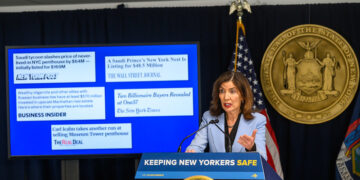
While the administration began the year warning of a $12 billion deficit over the next two fiscal years, Mr. Mamdani announced that the gap for the upcoming year had been narrowed to roughly $7 billion. This reduction was fueled by higher than expected Wall Street bonuses, a surge in tax revenue forecasts, and a $1.5 billion aid package announced Monday by Governor Kathy Hochul.
To bridge the remaining divide and fund his “affordability agenda,” the Mayor is looking toward a perilous path: taxing the city’s most profitable corporations and wealthiest residents. Central to this strategy is a request to state lawmakers for a 2 percent income tax surcharge on New Yorkers earning more than $1 million a year—a move estimated to generate $4 billion annually.
An Agenda of ‘Ambition’
Despite the fiscal headwinds, Mr. Mamdani remained defiant, framing the budget as a choice between “austerity and ambition.” The proposal includes the first installments of the campaign promises that carried him to City Hall:
- Universal Childcare: A $1.2 billion joint commitment with the state to provide free care for children from six weeks to five years old.
- ‘Fast and Free’ Buses: A $700 million allocation to begin making the city’s bus system free, starting with high-poverty routes.
- Social Housing: A $10 billion down payment on a ten-year, $100 billion commitment to build and preserve 200,000 units of publicly subsidized housing.
“Working New Yorkers did not cause this crisis, and they cannot be made the victims of its solution,” Mr. Mamdani said.
Resistance at City Hall
The release of the preliminary budget was met with immediate skepticism from fiscal watchdogs and legislative leaders. Speaker Julie Menin, while supportive of the Mayor’s housing goals, expressed sharp concern over the administration’s reliance on “rainy day” reserves to cover recurring operational costs.
“Dipping into reserves is a one-time fix for a long-term problem,” Ms. Menin said. “The Council believes there are additional areas of savings and revenue that deserve scrutiny before increasing the burden on small property owners.”
The City Comptroller, Mark Levine, echoed these concerns, characterizing the city’s fiscal strain as the most significant since the 2008 financial crisis. While Mr. Levine praised the Mayor for the “honesty” of his accounting, he warned that the plan relies on “aggressive” revenue projections and the cooperation of a State Legislature that has historically been hesitant to grant the city autonomy over its tax rates.
In a rare public statement, a spokesperson for former Mayor Eric Adams dismissed the narrative of a manufactured crisis as “political theater,” arguing that the current administration was “finding” revenue to justify its own spending.
The release of the preliminary budget kicks off months of negotiations with the City Council. A final budget must be adopted by the July 1 deadline.