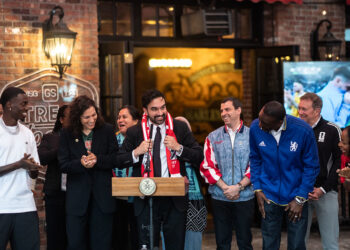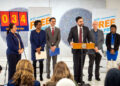



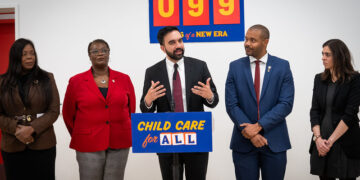


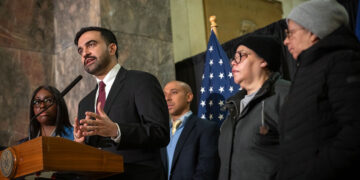



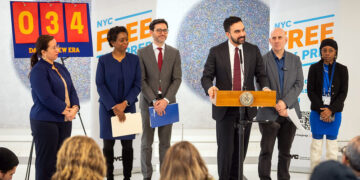



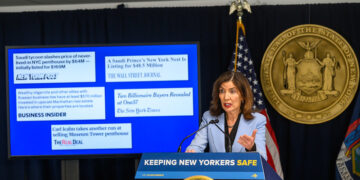

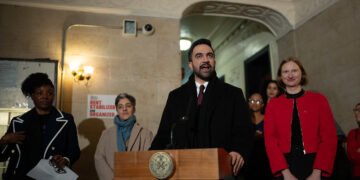

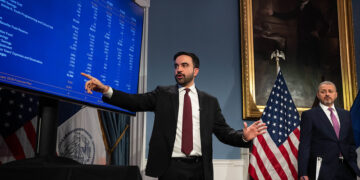
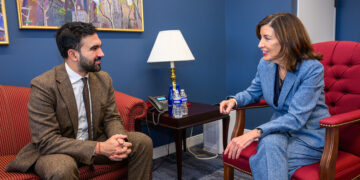
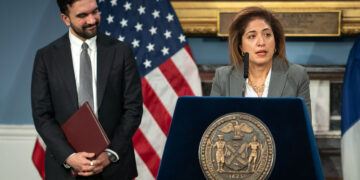












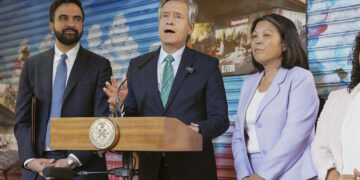



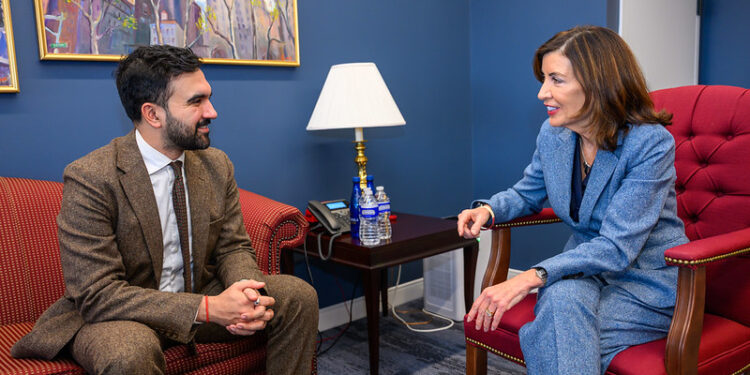
In a rare show of fiscal alignment between City Hall and Albany, Mayor Zohran Mamdani and Governor Kathy Hochul announced on Monday a $1.5 billion infusion of state aid intended to stabilize New York City’s precarious finances. But the deal, unveiled at a joint press conference, did little to mask a deepening ideological rift over who should pay for the city’s long-term recovery.
The funding package, which includes $1 billion for the upcoming fiscal year and $510 million for the next, is designed to reverse years of “cost-shifting” where the state unburdened its own budget by saddling the city with local expenses. The money will specifically target youth programming, public health, and a restoration of $150 million in sales tax receipts that the state had previously intercepted.
“A strong New York City means a stronger New York State,” Governor Hochul said, framing the deal as a pragmatic victory for “working families.”
For Mayor Mamdani, a Democratic Socialist who took office in January promising a radical departure from the “austerity politics” of his predecessor, the $1.5 billion is a down payment on a much larger debt he believes the state owes the city.
The “Drain” on City Coffers
Despite the celebratory tone of the announcement, Mr. Mamdani used the platform to renew his critique of the structural fiscal relationship between the two governments. The Mayor has frequently cited a “stunning fiscal imbalance,” noting that New York City contributes approximately 54.5 percent of state revenue but receives only 40.5 percent back in spending.
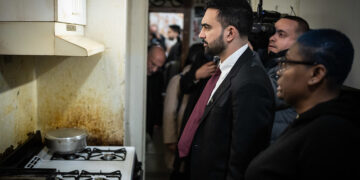
“Working New Yorkers did not create this budget crisis, and they should not be the ones to pay for it,” Mr. Mamdani said. He described the current arrangement as a “drain” on city resources, arguing that the city has essentially functioned as an ATM for the rest of the state while its own essential services including everything from libraries to public housing, face chronic underfunding.
The Mayor has specifically called for the restoration of “AIM” (Aid and Incentives for Municipalities) funding for the city, a revenue-sharing program that was eliminated for New York City in 2010 but continues for every other municipality in the state.
A Tale of Two Tax Brackets
The most significant point of friction remains how to bridge the city’s remaining $7 billion budget gap. Mr. Mamdani has staked his mayoralty on a “Tax the Rich” platform, proposing:
- A 52 percent increase in the city’s income tax rate for the top 1 percent of earners.
- A 59 percent hike in the state corporate tax rate for the city’s roughly 1,000 most profitable companies.
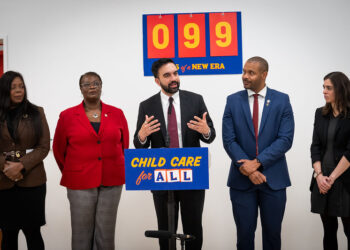
The Mayor argues these measures would generate $9 billion annually, more than enough to cover the deficit and fund his ambitious social agenda, including free universal childcare.
However, Governor Hochul, a moderate Democrat facing a reelection campaign, has remained a firm firewall against such hikes. She has repeatedly dismissed the need for new taxes on the wealthy, expressing concerns that such a move could trigger “capital flight”—the exodus of high-earners and corporations to lower-tax states like Florida or Connecticut.
“We have to be mindful of the competitive landscape,” Ms. Hochul said recently, signaling that while she is willing to sign off on state aid, she is not prepared to authorize the city to tax its way out of the hole.
The Political Horizon
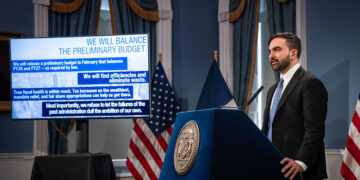
The $1.5 billion deal provides a temporary ceasefire, but the underlying tensions are expected to come to a head on February 17, when Mayor Mamdani is scheduled to release his administration’s first preliminary budget.
While the Mayor has been careful to maintain a “delicate alliance” with the Governor, even including endorsing her for reelection, the pressure from his progressive base to force a vote on wealth taxes in Albany is mounting. For now, the city sits on a financial ledge, saved from a tumble by a state check, but still searching for a permanent floor.