










































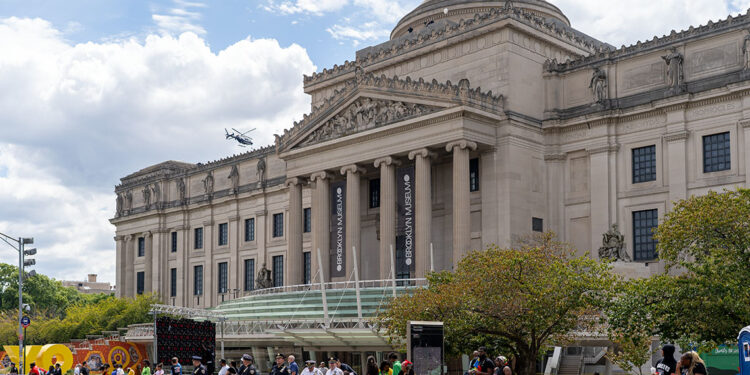
In a moment defined by the collapse of boundaries between art and design, organism and algorithm, craft and science, Sculpting the Senses arrives at the Brooklyn Museum as a statement of intent. The North American debut of Iris van Herpen’s landmark exhibition opens to the public on May 16, 2026, anchoring a season of cultural exploration and positioning the Dutch designer not simply as a couturier but as one of fashion’s most rigorous thinkers working at the intersection of aesthetics, biology, and technology.
Stepping into the galleries feels less like entering a retrospective than entering an immersive environment. Light refracts across translucent forms that appear to float rather than hang in space. Sound moves gently through the rooms, an ambient score that shapes the experience as much as the garments themselves. The dresses shimmer, ripple, and curve as if animated by unseen forces, evoking ocean currents, cellular structures, and planetary motion. Nothing feels static. Everything feels alive.
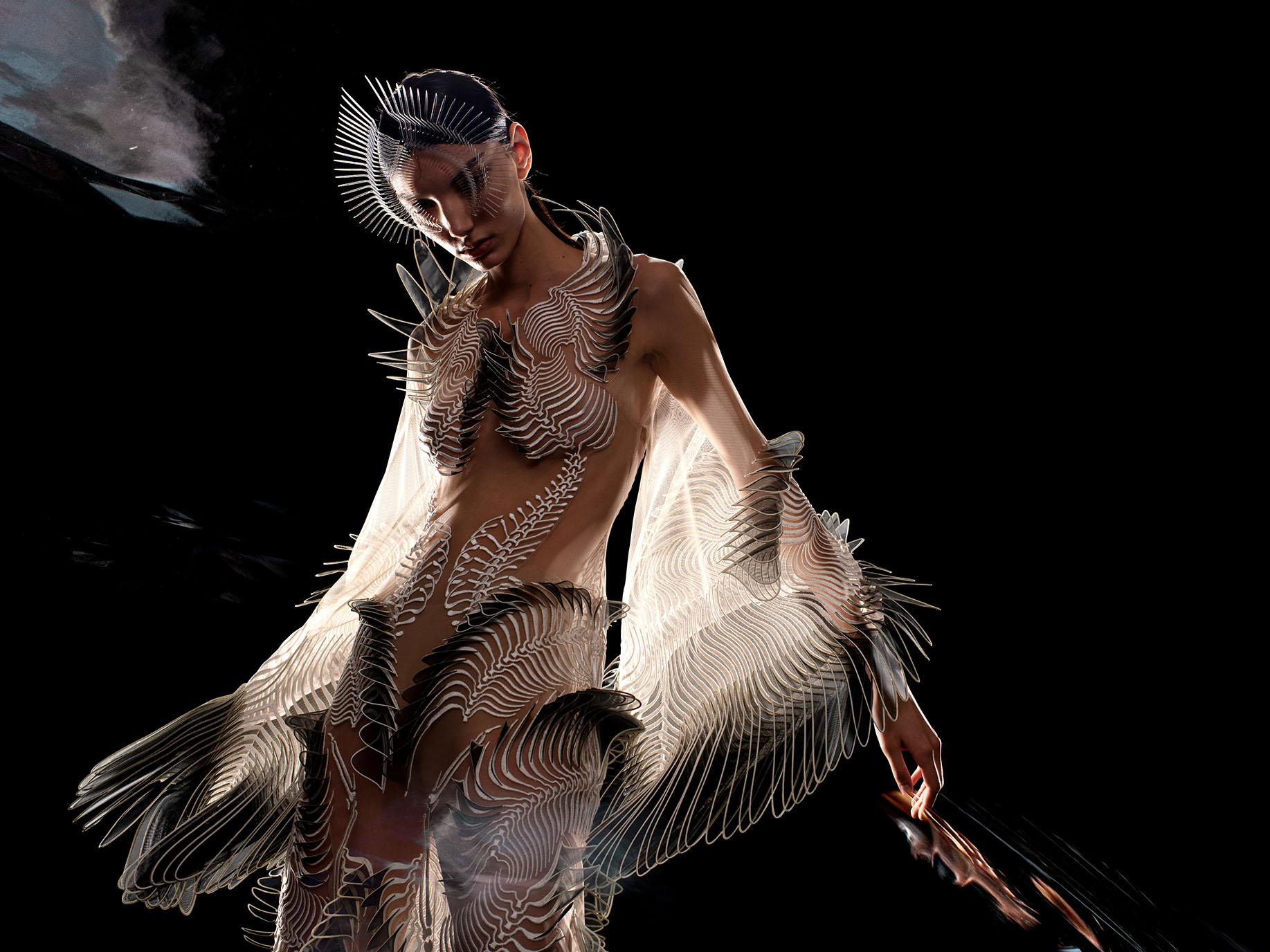
At the heart of the exhibition are more than one hundred couture creations spanning van Herpen’s career. These are not garments in a conventional sense. They are sculptural propositions that exist between clothing, architecture, and anatomy. Some evoke the delicate branching of coral reefs, others express the aerodynamic logic of wings or the skeletal elegance of bone. Materials range from hand worked textiles to experimental synthetics developed through advanced fabrication techniques, each piece balancing precision with organic fluidity.
The exhibition unfolds thematically, allowing visitors to move through elemental worlds of water, air, and earth. Alongside the couture works are contemporary artworks and natural objects including fossils, shells, and anatomical forms. This dialogue underscores van Herpen’s longstanding fascination with natural systems and her belief that fashion belongs within a broader ecological and scientific conversation.
Van Herpen’s work has always been rooted in paradox. She embraces traditional couture techniques while also pushing the possibilities of new technologies. Her Amsterdam studio operates as a laboratory of ideas where artisans, engineers, scientists, and artists collaborate. The result is work that feels both ancient and futuristic, intimate and expansive.
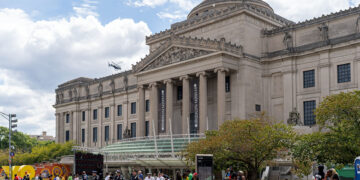
Presented in Brooklyn, the exhibition takes on added resonance. The museum’s history of framing fashion within cultural and artistic contexts makes it an ideal setting for van Herpen’s work, which resists easy categorization. Here, clothing becomes a medium for exploring the body’s relationship to space, environment, and transformation.
Sculpting the Senses ultimately proposes a vision of fashion that is intellectual as well as sensory. It invites viewers not just to look but to feel and to consider how design can mirror the invisible systems that shape the world around us. In doing so, Iris van Herpen expands the language of couture and reminds us that fashion, at its most ambitious, can be a way of understanding the universe itself.