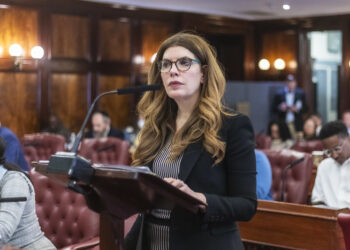









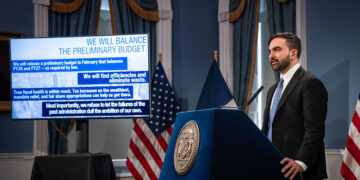








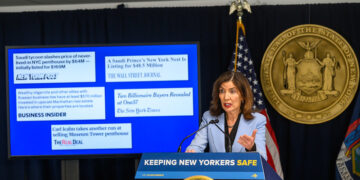










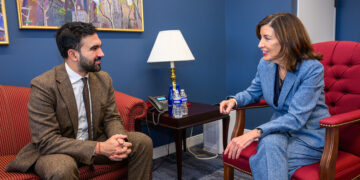






















Mayor Zohran Mamdani has appointed new commissioners to three major New York City agencies, advancing his administration’s pledge to strengthen city governance, improve operational performance, and embed equity into public services. Sharun Goodwin will lead the Department of Probation, Yume Kitasei will head the Department of Citywide Administrative Services (DCAS), and Lisa Garcia will oversee the Department of Environmental Protection (DEP).
The appointments mark one of the first major personnel moves by Mamdani since taking office in January. Officials presented the selections as part of a broader effort to realign agency leadership with the administration’s priorities on efficient service delivery, environmental justice, and justice-system reform.
Commissioner Picks Reflect Experience and Policy Emphasis
Sharun Goodwin, a 37-year veteran of the probation system who has served in roles from field officer to deputy commissioner, returns from retirement to lead the Department of Probation. Mamdani framed her appointment as a bid to balance enforcement with community investment, an approach echoed in her remarks emphasizing “accountability and opportunity” through data-driven supervision and community partnerships.
Yume Kitasei, tapped to lead DCAS which is the agency responsible for workforce operations, procurement, and asset management, has held senior administrative roles in city government. In her acceptance remarks, Kitasei characterized DCAS as central to tackling persistent operational challenges including hiring bottlenecks and advancing municipal climate goals.
Lisa Garcia, appointed commissioner of DEP, brings federal environmental experience, most recently as an administrator for Region 2 of the U.S. Environmental Protection Agency, overseeing programs related to pollution control and water quality. The DEP role positions her at the center of infrastructure and resilience policies including stormwater management and potable water delivery which are areas that city planners have identified as critical amid climate pressures.
Policy Signals and Governance Expectations
The appointments arrive against a backdrop of intensified focus on operational efficiency and transparency across agencies. DCAS, for example, plays a pivotal role in addressing hiring delays that have hampered service delivery; Kitasei’s leadership will be closely watched by labor and management stakeholders. Independent experts note that improving recruitment and retention systems is key to restoring capacity in city government after years of high vacancy rates.
Meanwhile, probation policy has been under scrutiny as city and state justice reforms reshape criminal justice priorities. Goodwin’s approach — combining supervision with rehabilitation — aligns with broader shifts toward community-oriented public safety, though implementation details remain pending.
At DEP, Garcia inherits ongoing initiatives such as major capital projects and sustainability planning. City environmental advocates have underscored the need for equitable investment in underserved neighborhoods that face disproportionate climate risk, a theme Garcia cited in her remarks.
Challenges Ahead
During a Q&A at the press briefing, reporters pressed the new commissioners on issues including transparency around prior agency reviews and ongoing infrastructure programs. Mamdani indicated that reviews of past contracts and leases would proceed and that commissioners would need time on the job before offering detailed plans.
Analysts caution that while the appointments signal administrative intent, measurable progress will depend on the new leaders’ ability to align agency operations with the mayor’s broader policy agenda, especially in areas where systemic inertia and budget constraints pose obstacles.
The trio of appointments underscores the Mamdani administration’s early effort to install experienced leadership across agencies with heavy operational and policy responsibilities. As governance priorities evolve, how these commissioners deliver on efficiency, equity, and service continuity will determine the administration’s effectiveness in its first year.