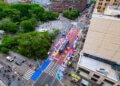

























One year after New York implemented congestion pricing in Manhattan’s Central Business District, state officials say the program is beginning to deliver on its promise of fewer cars, faster buses, and new funding for a transit system long starved of reliable investment.
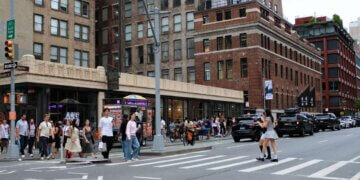
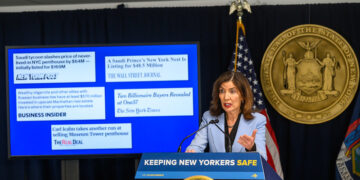
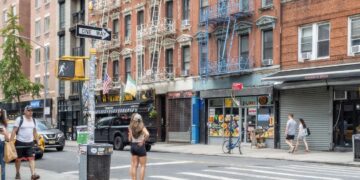
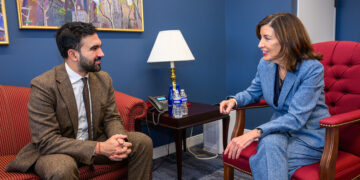
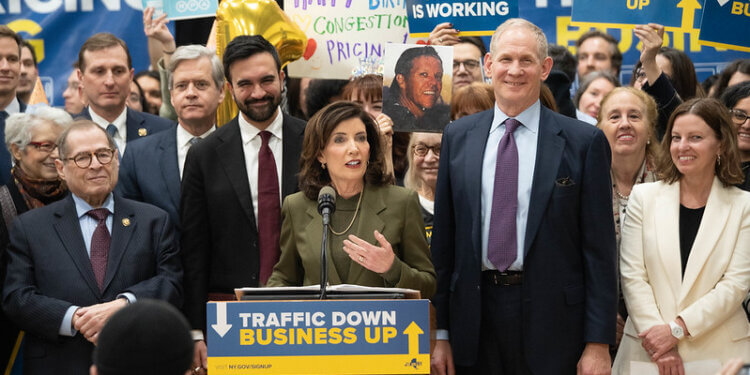
Governor Kathy Hochul on Monday marked the anniversary by pointing to early data that shows a measurable decline in vehicle traffic south of 60th Street, along with improvements to bus speeds and more predictable travel times for commuters. According to state transportation officials, traffic entering the congestion zone has fallen by double digit percentages during peak hours, easing gridlock on some of the most crowded streets in the country.
Hochul highlighted that traffic entering Manhattan’s Congestion Relief Zone has dropped by about 11 percent over the past year leading to roughly 27 million fewer vehicles. She said this reduction has eased gridlock in the core of the city and improved conditions for drivers and transit riders alike.
The governor noted that pollution levels have fallen by more than 20 percent in the congestion zone, a change she said is already having measurable health benefits, particularly for people with asthma and respiratory issues.
For millions of New Yorkers who rely on public transportation, the most tangible changes have been above ground. Bus riders, particularly in Midtown and Lower Manhattan, are seeing shorter trip times as fewer private vehicles clog intersections. Emergency response times have also improved modestly, according to city data, a development officials say underscores the public safety benefits of reduced congestion.
Congestion pricing was designed not only to reduce traffic but to generate a stable revenue stream for the Metropolitan Transportation Authority. Tolls collected from drivers entering the zone are projected to raise billions of dollars over the coming years, money earmarked for subway signal upgrades, accessibility improvements, and the expansion of electric bus fleets.
Hochul reiterated that the program has generated more than $550 million in net revenue in its opening year, which she said will support $15 billion in capital projects to improve the subway, bus and regional rail systems. The state says those funds are already being programmed into long delayed capital projects.
The impact has not been uniform. Traffic has increased on some perimeter streets in Upper Manhattan and western Brooklyn as drivers seek to avoid tolls, a concern raised by community advocates when the program was debated. State officials say they are monitoring those patterns and adjusting traffic management strategies to prevent new choke points from forming.
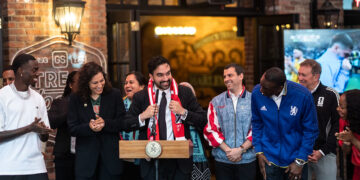
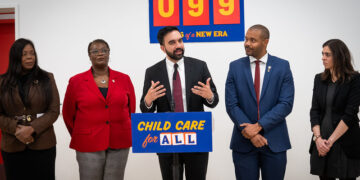
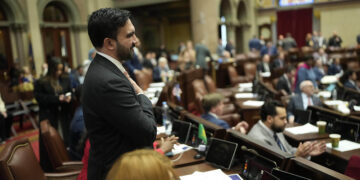
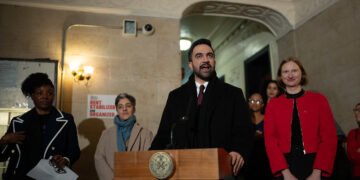
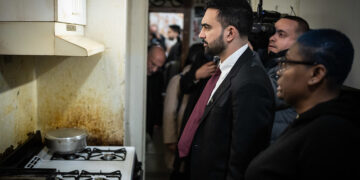
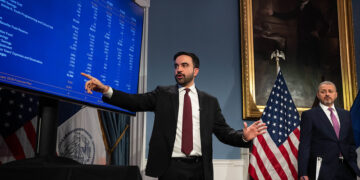
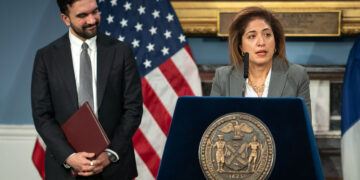
The anniversary comes as congestion pricing enters a new political phase. With a new mayor in City Hall, Zohran Mamdani, who campaigned on improving transit affordability and reducing car dependence, the city and state appear more closely aligned than they were at the program’s launch. Mamdani has framed congestion pricing as a necessary but incomplete step, arguing that toll revenues must be paired with fare relief, stronger bus priority, and expanded service to truly make the city more livable.
Governor Hochul described the first year as proof that the model works. “Less traffic means better transit, cleaner air, and a more efficient city,” she said. Still, she acknowledged that congestion pricing remains a work in progress, one that will require constant data analysis, public engagement, and political resolve.