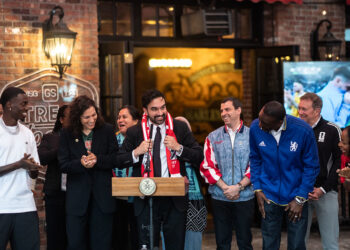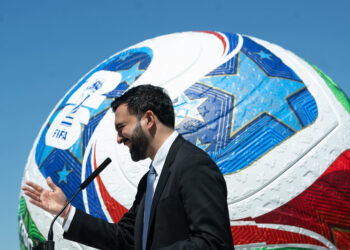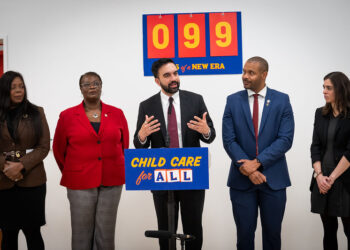
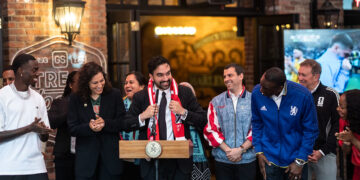




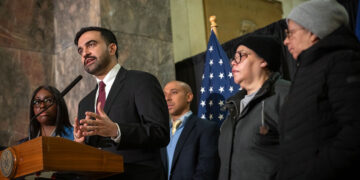

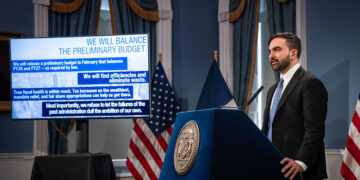


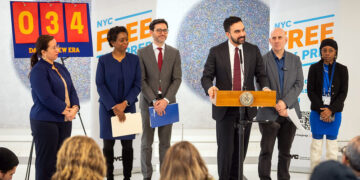

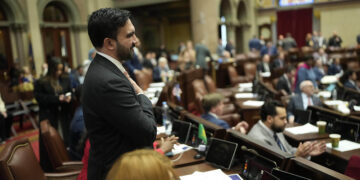


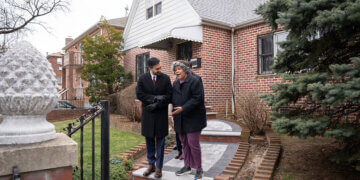



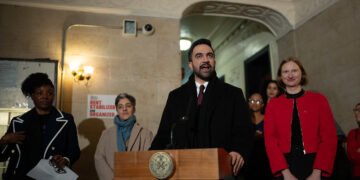













New York City ushered in a new era of leadership as Zohran Mamdani was formally sworn in as the city’s mayor in a public ceremony at City Hall Plaza. At 34 years old, Mamdani became one of the youngest mayors in modern history and set several historic firsts: he is the first Muslim and first South Asian mayor of New York City, and the first mayor born in Africa.
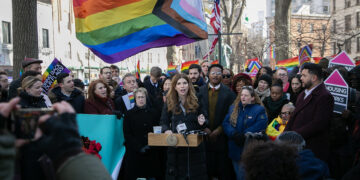
Thousands gathered in the bitter winter air outside City Hall to witness the moment. Elected in November 2025 after a popular campaign focused on affordability, housing access and public services, Mamdani’s inauguration drew a diverse crowd of community leaders, activists, New Yorkers from all boroughs and national political figures. Among those in attendance was Representative Alexandria Ocasio-Cortez, who delivered a keynote address praising Mamdani’s victory as “a choice for courage over fear” and celebrating his dedication to improving life for working people across the city.
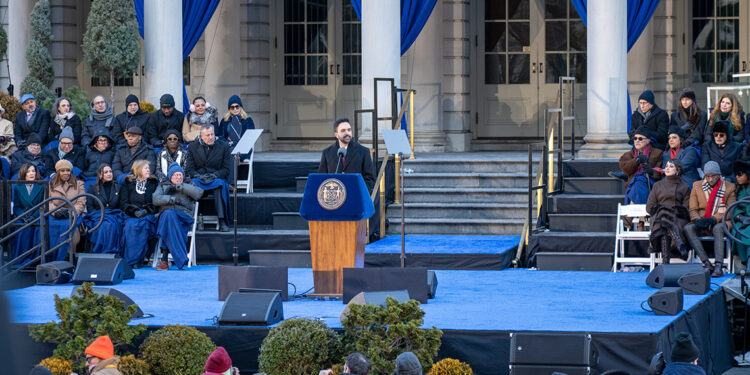
At the podium, Ocasio-Cortez hailed Mamdani’s leadership as a turning point for the city’s future, saying his election signaled “a mayor for all of us.” Her remarks underscored the groundswell of support Mamdani drew from progressive voters and grassroots organizers during a campaign that lifted him from relative obscurity to the highest elected office in the city.
The formal City Hall inauguration came after an earlier, symbolic midnight ceremony. Shortly after 12 a.m., Mamdani had taken the oath of office in the abandoned Old City Hall subway station beneath City Hall, a site he chose to reflect his campaign’s emphasis on public transit, working families and the everyday experiences of New Yorkers. That ceremony was administered by New York Attorney General Letitia James, with Mamdani’s wife, Rama Duwaji, holding copies of the Quran upon which he swore his oath. It was an intentional choice reflecting his Muslim faith and identity.
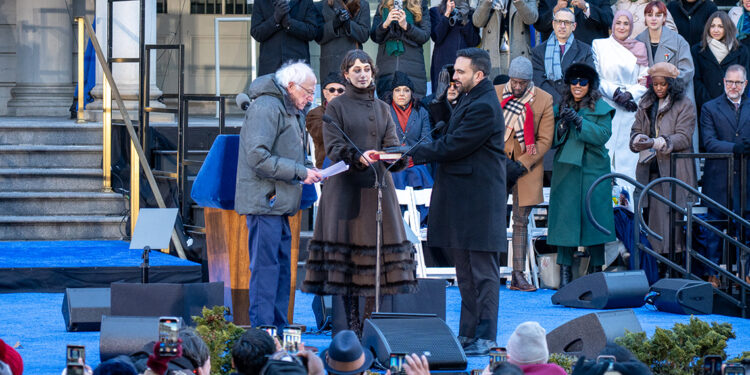
In the public afternoon ceremony, Vermont Senator Bernie Sanders administered the official oath of office on the steps of City Hall. His presence and support highlighted the national attention Mamdani’s election drew, and reinforced the connections between his progressive agenda and broader movements for economic and social justice.
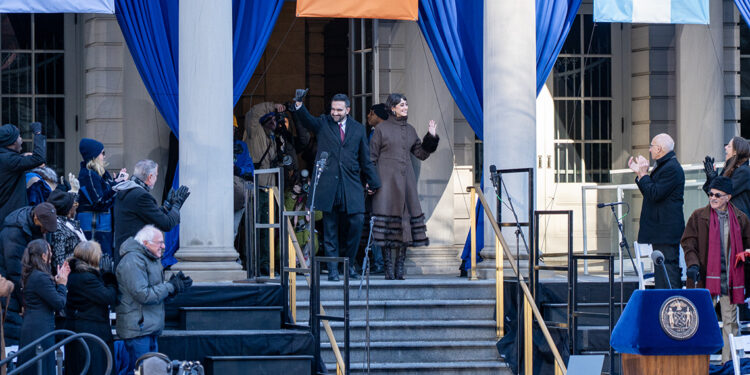
Duwaji, a illustrator and designer, stood beside her husband throughout the festivities. Her presence was widely noted not just as a personal support but as a representation of the city’s multicultural fabric. The couple’s journey from their New York neighborhoods to City Hall resonated with many residents who see in Mamdani’s rise a reflection of the city’s diversity and the possibilities of public service rooted in community experience.
In his inaugural address, Mamdani promised to “govern expansively and audaciously” and to pursue transformative policies aimed at tackling affordability, inequality and access to public services. He spoke directly to working families and marginalized communities, pledging to restore faith in government and reimagine what city leadership can do for everyday New Yorkers.
While celebrations were joyful, officials and observers acknowledged the formidable challenges facing the new mayor. New York’s housing crisis remains one of the most pressing issues for residents. Mamdani’s campaign proposed ambitious policies including rent freezes on stabilized apartments, expansions of affordable housing and more robust public services. Implementing these ideas will require cooperation with the state legislature and the city’s political establishment, a balancing act that will test his leadership early on.
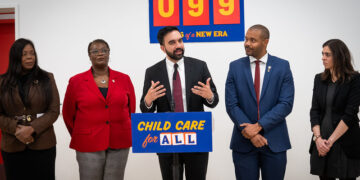
Public safety, economic inequality and infrastructure needs are also at the top of the city’s agenda. New Yorkers expect bold action on transit improvements, job opportunities, and essential services like child care and sanitation. Mamdani’s progressive platform seeks to address these issues holistically, but doing so in a city as large and complex as New York will require deft negotiation and coalition building.
The ceremony at City Hall featured cultural performances and reflections from community leaders, setting it apart from more traditional inaugurations. As confetti settled and the winter sun dipped low, many in the crowd expressed optimism about the city’s direction under Mamdani’s leadership. For a generation of New Yorkers, his inauguration represented a statement about possibility and a new era where the city’s government responds to the needs of its people.
Zohran Mamdani’s first day as mayor marked the beginning of a chapter that many hope will reshape New York City for years to come.