

















































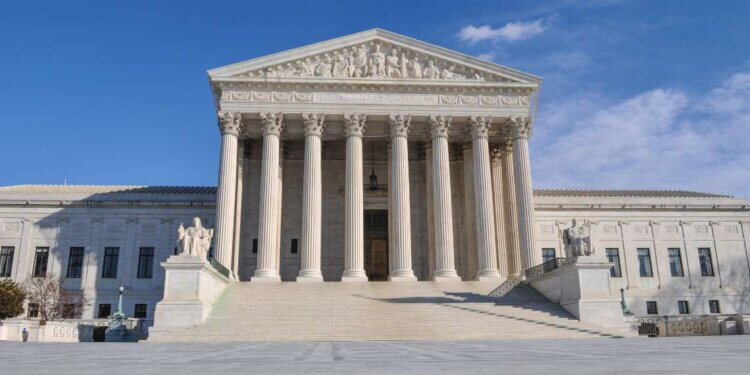
In a move that cements the political map for New York City’s only Republican-held congressional seat, the Supreme Court on Monday blocked a lower court’s order to redraw the 11th Congressional District ahead of the 2026 midterm elections.
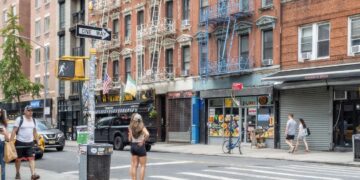
The decision is a significant victory for Representative Nicole Malliotakis, the Republican incumbent whose district which spans Staten Island and parts of southern Brooklyn, has been at the center of a protracted legal battle over racial gerrymandering and the limits of state judicial power.
In a brief, unsigned order, the court’s conservative majority stayed a January ruling by a New York State Supreme Court justice who had found the current boundaries unconstitutionally diluted the voting power of Black and Latino residents. The stay allows the 2026 elections to proceed under the existing map while the case continues to move through the state’s appellate system.
“Today’s decision by the U.S. Supreme Court to keep New York’s 11th Congressional District intact helps restore the public’s confidence in our judicial system and proves the challenge to our district lines was always meritless,” Ms. Malliotakis said in a statement released shortly after the ruling. She accused the plaintiffs of attempting to “use race as a weapon to rig our elections.”
A Sharp Divide on the Bench
The intervention drew a blistering response from the court’s liberal wing. Justice Sonia Sotomayor, joined by Justices Elena Kagan and Ketanji Brown Jackson, argued that the majority had overstepped by interfering in a state-level dispute before New York’s highest court had the opportunity to issue a final judgment.
“The Court takes the unprecedented step of staying a state trial court’s decision in a redistricting dispute on matters of state law,” Justice Sotomayor wrote in her dissent. She noted that the ruling appeared to contradict the court’s own recent precedents against meddling in state election laws so close to an election cycle, summarizing the majority’s logic as “Rules for thee, but not for me.”
Conversely, Justice Samuel A. Alito Jr., in a concurring opinion, characterized the lower court’s order as “unadorned racial discrimination.” He argued that the state judge’s mandate to redraw the district specifically to favor “minority voters” was a violation of the 14th Amendment’s Equal Protection Clause.
The Stakes for 2026
The 11th District has long been a Republican stronghold in a predominantly Democratic city. The legal challenge, brought by a group of voters represented by the Elias Law Group, sought to incorporate more diverse neighborhoods which potentially included parts of Lower Manhattan, would have likely tipped the seat in favor of a Democratic challenger.
The Supreme Court’s intervention comes as both parties engage in a high-stakes “tug-of-war” over redistricting nationwide. While the court recently declined to interfere with new maps in Texas and California, its decision to step into the New York case suggests a particular scrutiny toward state court orders that mandate race-based redistricting.
For Ms. Malliotakis, the ruling provides immediate clarity as the campaign season begins. Nominating petitions for the June primary were set to begin circulating just as the legal uncertainty reached its peak.
“Whether I serve another term in Congress is a decision for the voters,” Ms. Malliotakis said, “not Democrat party bosses and their high-priced lawyers.”