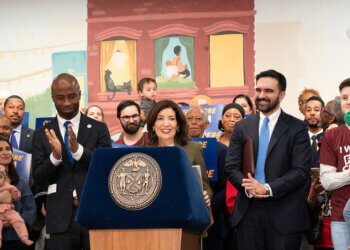





























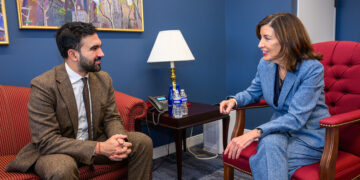



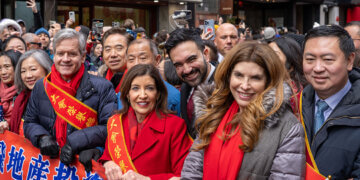




















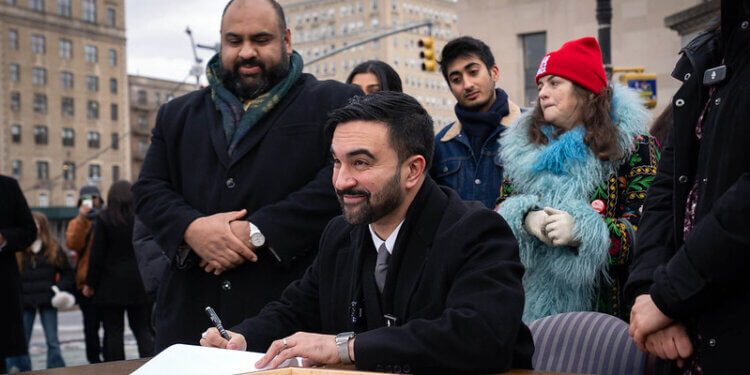
Mayor Zohran Mamdani moved quickly to redefine how City Hall interacts with residents by signing an executive order establishing the Mayor’s Office of Mass Engagement, a new entity designed to bring everyday New Yorkers into the process of governing the city. The move, announced on the second day of his administration, reflects a core promise of Mamdani’s campaign to open government to communities that have long felt unheard.
The Office of Mass Engagement is intended to transform civic participation by coordinating outreach across city agencies and creating direct channels for public input. Rather than relying solely on public hearings or formal comment periods, the office will proactively engage residents in neighborhoods across the city, particularly communities that have historically been excluded from policymaking.
Tascha Van Auken, who led Mamdani’s mayoral campaign field operation, was named commissioner of the new office. During the campaign, Van Auken oversaw one of the largest grassroots mobilizations in recent city history, organizing tens of thousands of volunteers and reaching millions of voters. City officials say that experience will now be applied to governing, turning campaign style organizing into a permanent feature of City Hall.
Mayor Mamdani said the office is meant to shift the balance of influence away from wealthy donors and insiders and toward working New Yorkers. He described the initiative as a way to ensure that residents affected by housing costs, public services and economic pressures are directly involved in shaping solutions rather than reacting to decisions after they are made.
The Office of Mass Engagement will also coordinate several existing city programs, including the Public Engagement Unit, NYC Service and the Mayor’s Office of Faith Based and Community Partnerships. By bringing these efforts under one umbrella, the administration hopes to reduce duplication and make it easier for residents to navigate city government and access resources.
For many New Yorkers, the impact of the new office could be felt in everyday interactions with the city, from housing assistance and social services to workforce programs and neighborhood planning. Community advocates say centralized engagement could help ensure that complaints and ideas raised at the local level reach decision makers faster.
Supporters of the move argue that previous administrations often relied on formal processes that favored those with time, money and political connections. They see the new office as a way to institutionalize participation for renters, immigrants and working class residents who may not otherwise engage with City Hall.
Critics caution that the office’s success will depend on whether public input meaningfully shapes policy rather than serving as a symbolic gesture. The administration says the goal is to embed engagement into decision making across agencies, not simply collect feedback. The Office of Mass Engagement represents one of Mayor Mamdani’s earliest attempts to change not just policy outcomes, but the culture of how the city governs itself.