














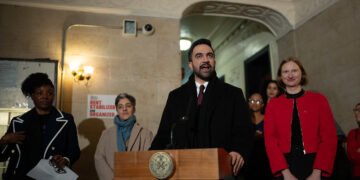

























Mayor Zohran Mamdani on Wednesday intensified his effort to raise taxes on high-income earners and profitable corporations to bridge a projected multibillion-dollar budget gap and finance his administration’s ambitious affordability agenda. The proposal, which hinges on approval by the state legislature and governor, sets the stage for a coming fiscal confrontation in Albany.
City financial projections anticipate a looming $10 billion to $12 billion deficit in the coming fiscal year which is among the most significant shortfalls since the Great Recession that is driven by structural cost pressures and projected declines in discretionary revenues. Mamdani has rejected cuts to core services and instead proposed expanding the city’s revenue tools.
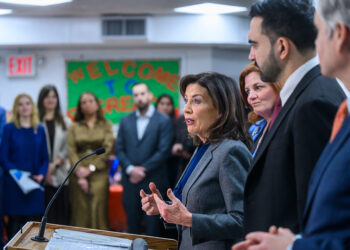
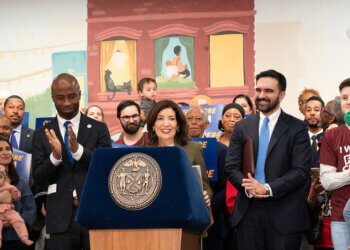
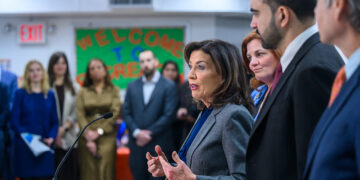
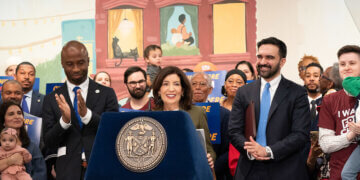
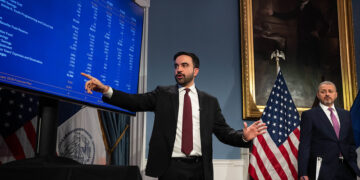
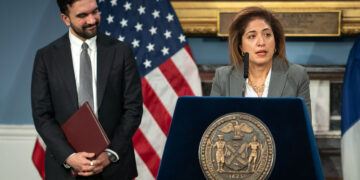
At a public briefing, Mamdani reiterated his call to levy an additional 2 percent personal income tax on New Yorkers earning above $1 million annually and to raise the state corporate tax rate to 11.5 percent. The mayor’s office estimates that these adjustments could generate roughly $9 billion in annual revenue, a figure tied directly to funding priorities that include fare-free buses and universal child care for children aged six months to five years.
“It is time for our wealthiest residents and most profitable corporations to pay their fair share so we can invest in everyday New Yorkers,” Mamdani said, framing his strategy as both a fiscal necessity and an equity imperative. He also underscored longstanding concerns about the city’s position in the state revenue system, saying that New York City contributes a disproportionately large share of state tax receipts relative to what it receives back in services.
State Opposition and Fiscal Politics
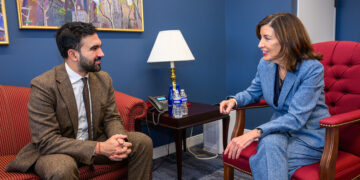
Governor Kathy Hochul’s $260 billion state budget, released earlier this month, does not include new personal income tax levies on top earners and maintains a firm stance against raising income tax rates. While the governor has expressed openness to adjustments in corporate tax policy, she has resisted broad tax increases as a means to plug budget gaps. The divergence between City Hall and Albany underscores competing fiscal philosophies within New York’s Democratic leadership and points to a potentially fractious budget negotiation.
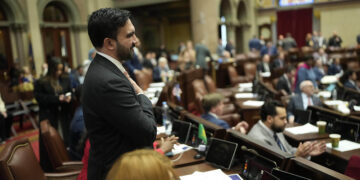
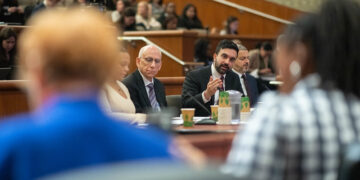
Mamdani’s proposal now faces a legislative gauntlet. Under current law, the city cannot unilaterally impose the new income or corporate tax rates without state approval — a dynamic that places considerable leverage in the hands of legislators and the governor’s office. Albany leaders will confront these issues amid a broader election-year political calculus, as both chambers of the legislature and Gov. Hochul navigate competing pressures from progressive advocates and moderate constituencies.
Policy Stakes and Economic Debate
Fiscal analysts note that New York City’s revenue base has traditionally depended on a small cohort of wealthy taxpayers, raising concerns that steep tax increases could erode the tax base if individuals and firms relocate to lower-tax jurisdictions. Critics argue that the combined city and state top marginal tax rate could approach historic highs, potentially diminishing the city’s competitive tax position.
Supporters counter that targeted tax increases can expand the city’s fiscal capacity without broadening the burden on middle- and lower-income residents. They also argue that enhanced revenue would support public investments that address cost-of-living pressures and promote long-term economic stability. The Independent Budget Office and other forecasting bodies have underscored the sensitivity of revenue projections to broader economic trends, particularly volatility in high-income earnings and corporate profits.
Budgetary Impasse and Next Steps
With the state legislative session underway and a final state budget due by April 1, the coming weeks will crystallize whether Mamdani’s revenue strategy gains traction in Albany. City officials have signaled that, absent state approval for new taxes, they will evaluate alternative budget scenarios but detailed contingency planning has not yet been disclosed.
The unfolding fiscal debate highlights the structural challenges confronting New York City’s government: mounting service demands, limited local taxation authority, and the balancing act between progressive policy aspirations and financial sustainability. How Albany responds to Mamdani’s proposals will shape the fiscal trajectory of the nation’s largest city well beyond the current budget cycle.