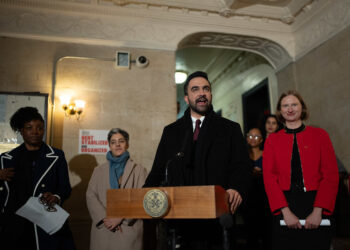






















































Inside Angelo’s Deli on Friday morning, the clatter of the breakfast rush provided the backdrop for what labor advocates are calling a watershed moment in New York City history.
Mayor Zohran Mamdani, joined by Department of Consumer and Worker Protection (DCWP) Commissioner Sam Levine and City Council Member Sandy Nurse, sat at a corner table with 12 Amazon warehouse employees. Over coffee, the workers who are currently organizing with the Teamsters, described a grueling reality: a choice between attending a child’s school play or a housing court date and keeping a paycheck.
The roundtable served as the formal launch for the city’s expanded Protected Time Off Law (Local Law 145 of 2025), a sweeping update to the city’s labor code that significantly broadens the safety net for the local workforce.
More Than Just Sick Leave
While New York has mandated paid sick leave for over a decade, Local Law 145 shifts the focus toward a more holistic definition of “time off.” The legislation, which officially took effect this month, introduces a tiered system of protections designed to prevent retaliatory firing for a variety of life’s necessities.
Under the new mandates:
- A New Baseline: Every employee in New York City is now entitled to 32 hours of unpaid protected leave immediately upon hire. This can be used for housing appointments, legal hearings, or family emergencies.
- Increased Paid Caps: Large employers (100+ employees) must now provide a minimum of 56 hours of paid safe and sick leave annually.
- The “Chosen Family” Clause: The law officially expands the definition of “family” to include “care recipients”—individuals whose close association with the employee is the equivalent of a family relationship.
A Message to Big Labor
The choice of Maspeth – a logistics hub in Queens – was no accident. By meeting with Amazon workers and the Teamsters, the Mayor signaled a shift in the city’s enforcement priorities toward high-pressure, low-wage sectors where “time-off task” (TOT) metrics often conflict with statutory labor rights.
“We heard today about workers being afraid to go to housing court because they don’t have ‘points’ to spare,” said Council Member Sandy Nurse. “This law removes that fear.”
The administration isn’t just relying on goodwill. Commissioner Levine announced on Friday that the DCWP has already dispatched 56,000 compliance warnings to businesses across the five boroughs, notifying them of the new standards and the steep penalties for non-compliance.
The Business Response
Despite the celebratory atmosphere at Angelo’s Deli, the city’s business community remains wary. Industry groups have voiced concerns that the “immediate” nature of the 32-hour unpaid leave could lead to staffing shortages for small businesses that operate on thin margins.
“Small business owners want to support their staff,” said a spokesperson for the Queens Chamber of Commerce. “But providing immediate leave without a vesting period creates an operational nightmare for mom-and-pop shops already struggling with labor costs.”
Mayor Mamdani dismissed these concerns, arguing that worker retention and stability would ultimately benefit the city’s bottom line. “When a worker doesn’t lose their apartment because they were able to go to court, that’s an economic win for New York,” he said.
Looking Ahead
The DCWP will begin active enforcement and site visits starting next month. For the 12 workers at the deli, the change feels like a long-overdue acknowledgment of their humanity. As the meeting concluded, one Teamster organizer noted, “It’s not just about the money anymore. It’s about the time.”