





















































On a cold January day inside City Hall, a familiar directive quietly made the rounds. Find the money. Or, more precisely, find the money that should not be there in the first place.
Mayor Zohran Mamdani’s latest executive order does not announce a dramatic new program or a sweeping cut. Instead, it creates a new title inside every city agency, Chief Savings Officer, and gives those designees a straightforward assignment. Scrutinize how their departments spend taxpayer dollars and identify where savings can be found, quickly and repeatedly.
The order, signed this week, requires agencies to name a savings officer within days, complete a budget and operations review within 45 days, and then report back twice a year. It is a managerial move rather than a legislative one, and its tone is technocratic. But the timing, and the inspiration, are anything but accidental.
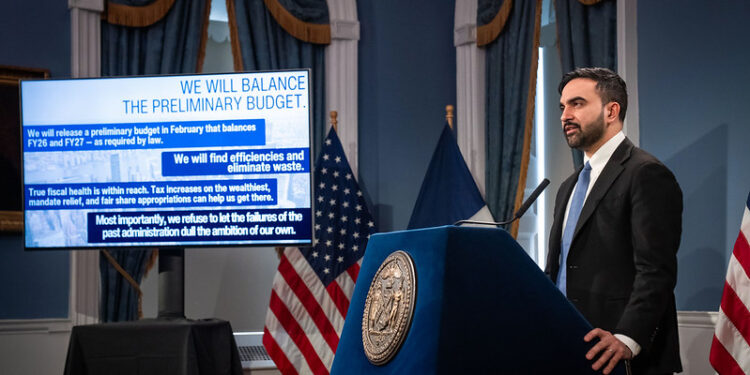
New York City is staring down a multibillion dollar budget gap, driven by rising labor costs, asylum seeker spending, debt service, and slowing revenue growth. The administration has been careful to say it wants to avoid blunt, across the board cuts to services. The savings officers are meant to be the alternative, a scalpel instead of an axe.
In spirit, the initiative echoes ideas popularized at the federal level by the short lived Department of Government Efficiency, or DOGE, a Trump era effort that promised to root out waste by embedding efficiency minded officials inside sprawling bureaucracies. While DOGE ultimately struggled with scale and politics, its core premise, that inefficiency is structural rather than incidental, has lingered.
City Hall is not branding this as a DOGE revival. There is no new department, no outside consultants parachuting in, and no promises of instant billions. Instead, Mr. Mamdani is betting on something quieter. Internal accountability, repeated reviews, and the symbolism of making savings someone’s actual job.
Still, the resemblance is difficult to ignore. Like DOGE, the city’s plan emphasizes measurement, duplication, and performance, managerial language that tends to surface when budgets tighten and patience wears thin. And like DOGE, it reflects a belief that government can, with enough pressure, learn to spend less without doing less.
The difference is scale and ambition. DOGE aimed to rewire Washington. New York’s version is local, agency by agency, conference room by conference room. Its success will depend less on rhetoric than on whether commissioners empower their designees or quietly sideline them.
For Mr. Mamdani, who has positioned himself as a progressive willing to challenge institutional inertia, the order also serves as a political signal. In a city wary of service cuts but increasingly anxious about fiscal stability, efficiency remains one of the few ideas that polls well across ideological lines.
Whether the Chief Savings Officers uncover meaningful and recurring savings, or simply repackage existing belt tightening, remains to be seen. But the message is already clear. As the budget crisis deepens, New York is borrowing a page from Washington’s recent experiments, adapting the language of efficiency to the realities of municipal government.
For now, the city’s newest job title comes with no corner office and little fanfare. Just a mandate that has echoed through City Hall before, and is echoing once again.