















































New York City’s Department of Transportation (DOT) is moving forward with a redesign of Madison Avenue that aims to create extended dedicated bus lanes for a key midtown Manhattan corridor, the city announced this week. The announcement comes as part of the Mamdani administration’s early agenda to improve public transit reliability and bring faster, more efficient bus service to tens of thousands of daily riders.
The plan, which was first proposed in 2025 but stalled under the previous mayor’s administration, will extend the existing double bus lane configuration on Madison Avenue from East 42nd Street south to East 23rd Street. Once completed, the redesign will offer two dedicated bus lanes, one general travel lane and a flexible curb lane that can function as a travel lane during rush hours and a parking lane during off-peak times.
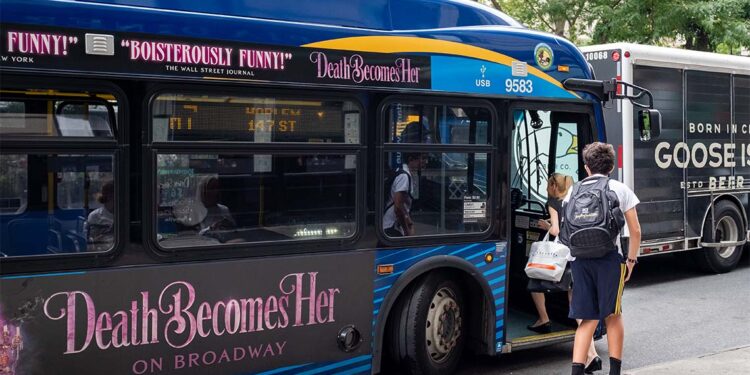
The extended bus lane project affects one of the city’s busiest transit corridors, where more than 92,000 riders use local and express buses each weekday. Riders on routes like the M1, M2, M3, M4, Q32 and numerous express services have long faced slow travel speeds averaging as low as 4 to 5 miles per hour south of 42nd Street, according to the DOT’s own data.
Transportation advocates and officials say the extended bus lanes will help the city capitalize on reduced traffic volumes following the implementation of congestion pricing, which cut vehicle entries into Manhattan’s central business district. By giving buses more unimpeded roadway space, the project is expected to boost speeds and reliability.
“Bus lanes are key to getting buses through traffic and keeping riders moving,” said NYC Transit President Demetrius Crichlow in a statement provided by the mayor’s office. The extended lanes, combined with improved enforcement, are designed to make it easier for buses to maintain consistent travel times, particularly during peak hours.
The project’s revival also sparked pointed commentary from city officials about past administrative barriers. Deputy Mayor for Operations Julia Kerson criticized the previous administration for allowing the project to fall out of the city’s painting season which is a critical timeframe for applying lane markings prevented progress. Her remarks underscored the current administration’s intention to accelerate infrastructure work that had languished.
DOT Commissioner Mike Flynn said the agency expects the bus lane extension to be completed by the end of 2026, weather permitting. He noted that when similar bus lanes were installed on Fifth Avenue, local buses saw speed increases of 6 to 12 percent, while express buses improved by 11 to 20 percent.
Local lawmakers and transit advocates welcomed the announcement. Manhattan Borough President Brad Hoylman-Sigal said the project will improve commutes for residents and visitors alike, while new City Council Members highlighted the importance of street redesigns that prioritize transit access and pedestrian safety.
The Madison Avenue bus lane project is one of several public transit initiatives gaining momentum in early 2026, alongside broader street redesigns and safety improvements across the five boroughs.