
























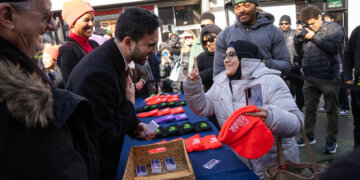











On most days, walking along Canal Street feels less like navigating a sidewalk and more like pushing through an open-air market that has spilled far beyond its boundaries. Despite repeated enforcement efforts and a highly publicized federal raid last fall, illegal street vending remains firmly entrenched along one of Lower Manhattan’s busiest corridors, continuing to obstruct pedestrian flow for residents and tourists alike.
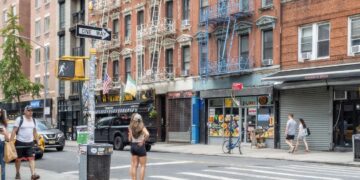
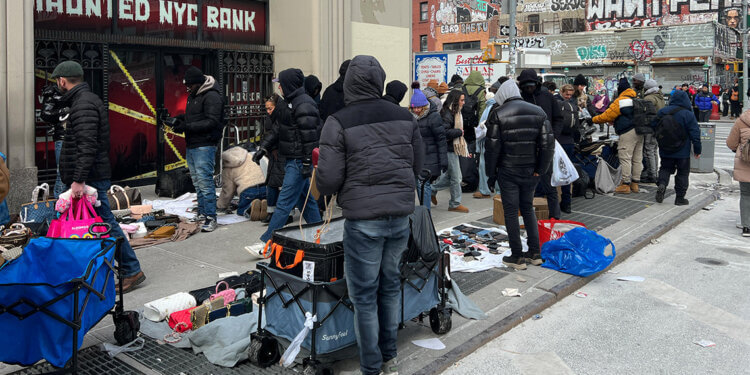
The heaviest congestion can be found near the intersections of Canal Street and Broadway, where dozens of vendors openly sell counterfeit luxury goods, electronics and accessories. Makeshift tables line the sidewalks, forcing pedestrians to step into the street or weave through tightly packed crowds. For local residents, the daily experience has become one of frustration and concern over safety, accessibility and quality of life.
Adding to the visibility of the operation is what nearby residents describe as a coordinated storage system. Just around the corner on Lispenard Street, vendors are seen regularly accessing a parked U-Haul truck used to store counterfeit merchandise. Throughout the day, sellers retrieve bags of goods from the vehicle, set up quickly on Canal Street, and just as quickly pack up when police approach. The operation resumes minutes later, often in the same exact spot.
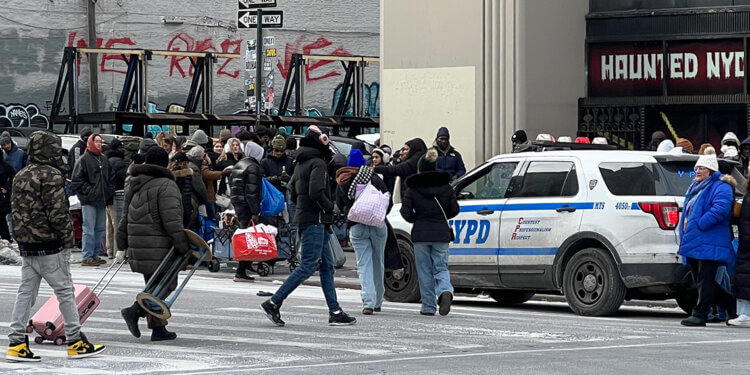
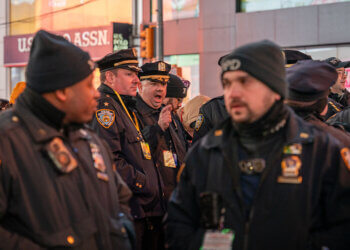
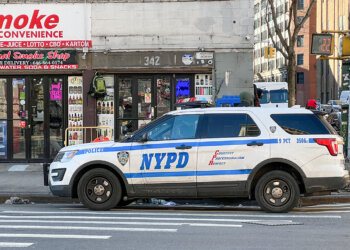
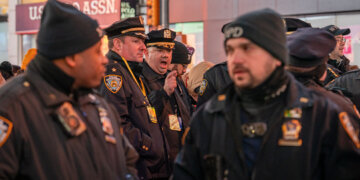
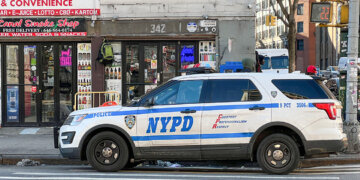
While NYPD officers are frequently present in the area, their role has largely been limited to briefly clearing sidewalks to allow pedestrian traffic to pass. Vendors are typically instructed to move along, but arrests are rare. Once officers leave the immediate block, sellers return, unfolding tables and laying out merchandise as if nothing had changed. The cycle repeats throughout the day.
For residents who live nearby, the pattern has become predictable. “It’s like a game,” said one longtime Chinatown resident. “They know exactly how long the police will stay. As soon as they’re gone, everything comes back.”
The result is a persistent bottleneck on sidewalks that were never designed to handle such dense commercial activity. Tourists unfamiliar with the area often stop abruptly to browse, adding to the congestion, while delivery workers, seniors and people with strollers struggle to move through the crowds.
What distinguishes the situation on Canal Street from other parts of the city, residents say, is the nature of the goods being sold. Unlike licensed food vendors, artists selling handmade items, or permitted souvenir stands, the Canal Street vendors are widely understood to be selling illegal counterfeit merchandise. Luxury brand logos are openly displayed, often without any attempt at concealment, in plain view of passersby and law enforcement alike.
This distinction has become central to the community’s frustration. Many residents say they support legal street vending and recognize its role in the city’s economy and culture. What they object to is the scale and illegality of the Canal Street operation, which they argue goes far beyond informal commerce and has effectively turned public sidewalks into blocked passageways.
In recent years, there has been only one notable exception to the daily congestion. In October, a federal operation involving Immigration and Customs Enforcement and other agencies temporarily cleared the area. During the raid, sidewalks were empty, vendors disappeared, and residents say it was the first time in years that Canal Street felt passable.
But the change was not permanent. Within weeks, vendors returned, and the same patterns resumed. Today, conditions are largely unchanged from before the raid, reinforcing the sense among residents that enforcement without sustained action has little impact.
Business owners in the area also report mixed consequences. Some say the crowds deter customers who want to move quickly through the neighborhood, while others worry that the association with counterfeit goods undermines legitimate commerce.
City officials have acknowledged the challenges of managing illegal vending, particularly when enforcement intersects with broader debates over immigration, economic survival and public space. Still, for those who live and work near Canal Street, the issue feels less abstract and more immediate.
As pedestrians squeeze past tables, dodge merchandise laid directly on the ground, and step into traffic to get around blockages, the question remains unresolved: how to balance compassion, enforcement and the basic ability to walk freely on one of New York City’s most heavily traveled streets.