
































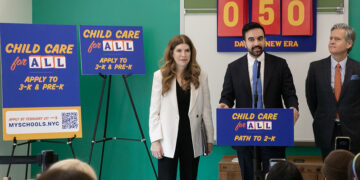





The U.S. Department of Health and Human Services has announced a halt to roughly $10 billion in federal funding that supports child care, social services and family assistance programs in five Democratic led states, including New York, as part of an effort the department says is aimed at rooting out suspected fraud and misuse of taxpayer dollars. The action, confirmed by HHS officials and reported by multiple news outlets, represents a dramatic escalation in how the federal government oversees major social safety net funding streams.
Under the freeze, New York, California, Colorado, Illinois and Minnesota will be temporarily blocked from accessing funds from three key federal programs: the Child Care and Development Fund (CCDF), the Temporary Assistance for Needy Families (TANF) program, and the Social Services Block Grant (SSBG). CCDF funds help working families afford child care, TANF provides cash assistance to low-income households with children, and SSBG supports a wide range of family and community services.
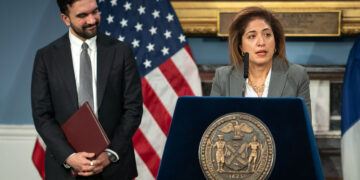
Deputy HHS Secretary Jim O’Neill, in a press release, said the decision reflects the department’s “commitment to program integrity, fiscal responsibility, and compliance with federal requirements.” The agency noted concerns that some benefits intended for U.S. citizens and lawful residents may have been improperly provided to individuals who are not eligible under federal law. As a result, HHS is requiring the five states to submit documentation such as attendance records, inspection reports and other proof of legitimate use before payment is restored.
The department has also launched a dedicated fraud reporting portal and emphasized that funds will remain frozen until a review confirms full compliance with federal rules. Critics, however, say the freeze lacks transparency and risks jeopardizing essential support for families that depend on these services.
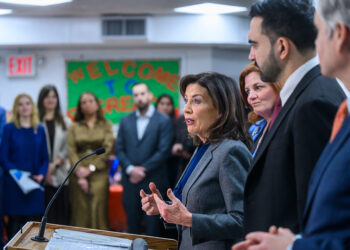
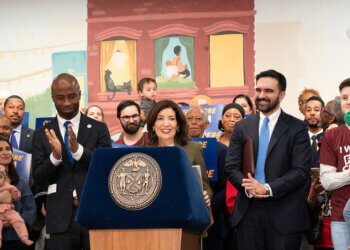
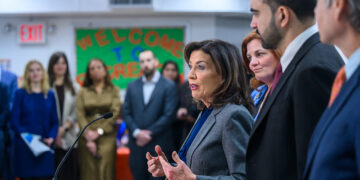
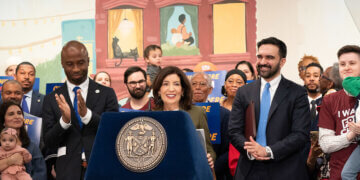
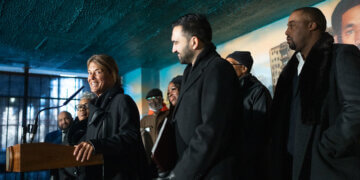
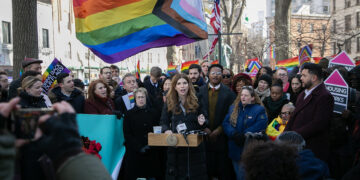
New York Governor Kathy Hochul vowed to fight the decision, calling it a “frontal assault on children.” In remarks to reporters, Hochul accused the Trump administration of making children “political pawns in a fight” with Democratic governors and said she would challenge the freeze in court if necessary.
The freeze comes amid broader federal scrutiny following allegations of fraud in Minnesota’s child care system, where some investigations have linked fraudulent billing and diversion of funds to a nonprofit organization and other actors. While HHS has pointed to these and other fraud concerns as justification, officials have not publicly presented evidence showing that widespread fraud exists in all five states.
Democratic leaders in New York and elsewhere have denounced the move as politically motivated and potentially devastating for vulnerable families. U.S. Senators Chuck Schumer and Kirsten Gillibrand blasted the decision as misdirected, arguing it punishes children and low-income families for alleged administrative lapses rather than directly addressing fraud. Critics say the lack of a public evidence base for alleged fraud in states other than Minnesota undermines the federal argument for a broad funding freeze.
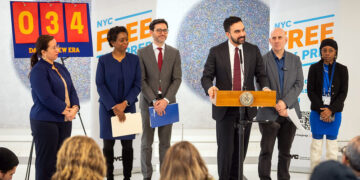
Economists and child policy experts warn that delaying access to child care subsidies and assistance could have immediate impacts for working parents who depend on these supports to participate in the labor force. New York City alone serves an estimated tens of thousands of children through federally funded child care programs, and any interruption in funding could strain providers and families already navigating high costs.