







































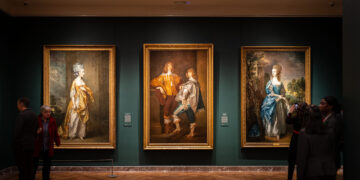








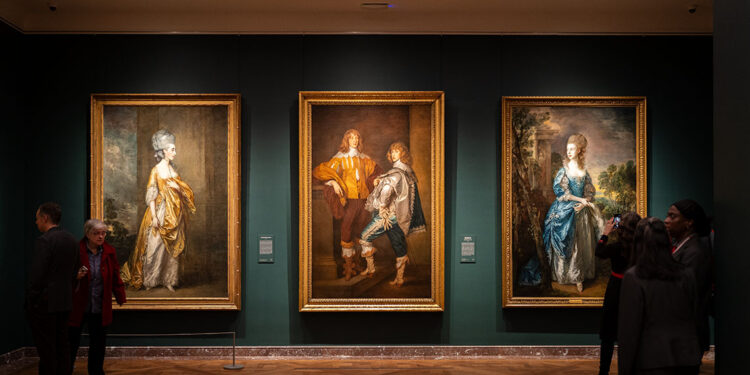
In a softly lit, intentionally shadowed gallery at the Frick Collection, Thomas Gainsborough’s masterful portraits emerge with quiet brilliance. Gainsborough: The Fashion of Portraiture, opening this Thursday, presents twenty-five of the artist’s most celebrated works, tracing nearly fifty years of a career that intertwined portraiture, landscape, and the social ambitions of eighteenth-century Britain.
Gainsborough, raised in the countryside of Sudbury, Suffolk, initially pursued landscape painting with passion, yet portraiture was the currency of social visibility and financial survival. In Georgian Britain—named for the reigns of George I through George IV—portraits were not mere likenesses. They declared status, recorded alliances, and conveyed political and cultural identity. Sitters’ clothing, gestures, and settings were deliberate, coded, and highly consequential.
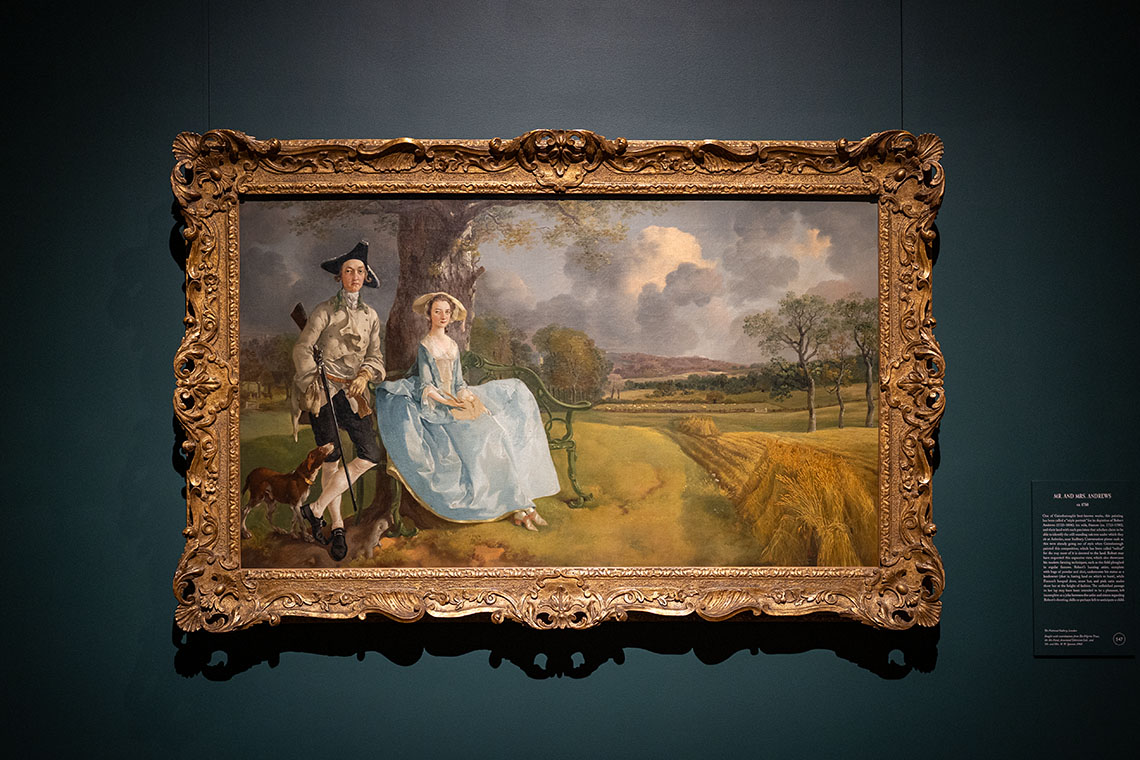
Early in his career, Gainsborough produced “conversation pieces,” small-scale group portraits, including one of three men from different social classes whose choice to be depicted together remains mysterious. These family-style portraits were already considered provincial by London elites, yet they allowed the young artist to explore relationships between sitters and setting. Mr. and Mrs. Andrews (c. 1750), one of the exhibition’s most famous paintings, demonstrates Gainsborough’s innovative compositional thinking. Robert Andrews, in hunting attire, stands beside his wife Frances, whose fashionable dress extends to pink satin mules, while the majority of the canvas celebrates their farmland. The blank space in Mrs. Andrews’ lap, possibly anticipating a pheasant yet to be shot—or even a child—adds an intimate, playful ambiguity.
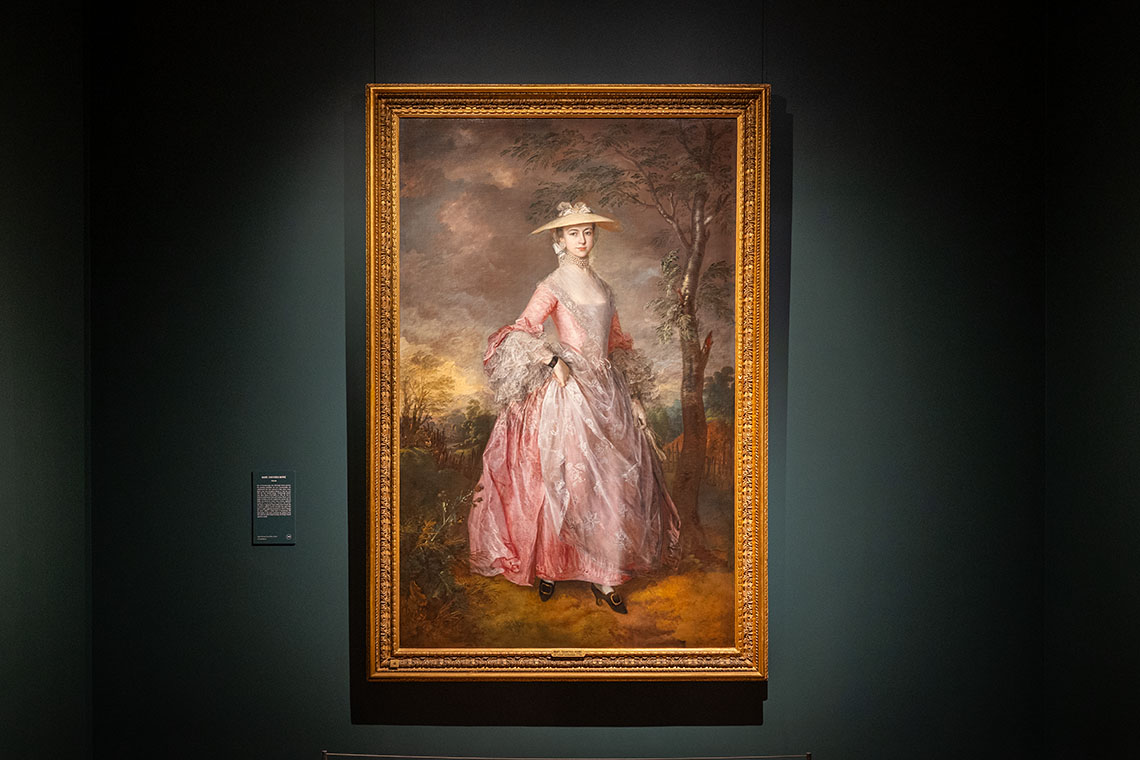
By the 1750s, Gainsborough sought wider audiences, moving first to Ipswich and later to Bath in 1759. The spa city attracted elites seeking the restorative waters and seasonal balls, concerts, and promenades, all occasions for the latest fashions to be displayed. Gainsborough set up a studio in the city’s social heart, next to his sister’s millinery shop. Portraits of Bath’s elite reflect his engagement with style. Mary, Countess Howe, strides outdoors in a Leghorn straw hat, silk nightgown, heeled shoes, and strings of pearls, embodying both modern fashion and social status.
Meanwhile, Gainsborough studied historic dress through prints and collections of Old Masters, particularly Anthony van Dyck. Some thirty of his works, including a copy of Van Dyck’s Lord John Stuart and His Brother, demonstrate how he married historic elegance with contemporary taste. The portrait of Bernard Howard, later 12th Duke of Norfolk, one of Gainsborough’s final works, combines Van Dyck–style clothing with eighteenth-century poise, bridging centuries of style.
Gainsborough’s portraiture was also socially and ethically nuanced. In his only known independent portrait of a Black sitter, Ignatius Sancho, the composer, writer, and abolitionist is presented as a gentleman, with no trace of his status as a servant. This rare work challenges assumptions of who could be depicted and how, highlighting the sitter’s accomplishments beyond his position as a servant.
Gainsborough later moved to London in 1774, becoming the country’s most sought-after society portraitist. He painted friends and musicians as gifts or exchanges, including Carl Friedrich Abel, depicted composing at his viola da gamba with a snoozing Pomeranian at his feet. These portraits reveal Gainsborough’s ability to balance informality, character, and fashion.
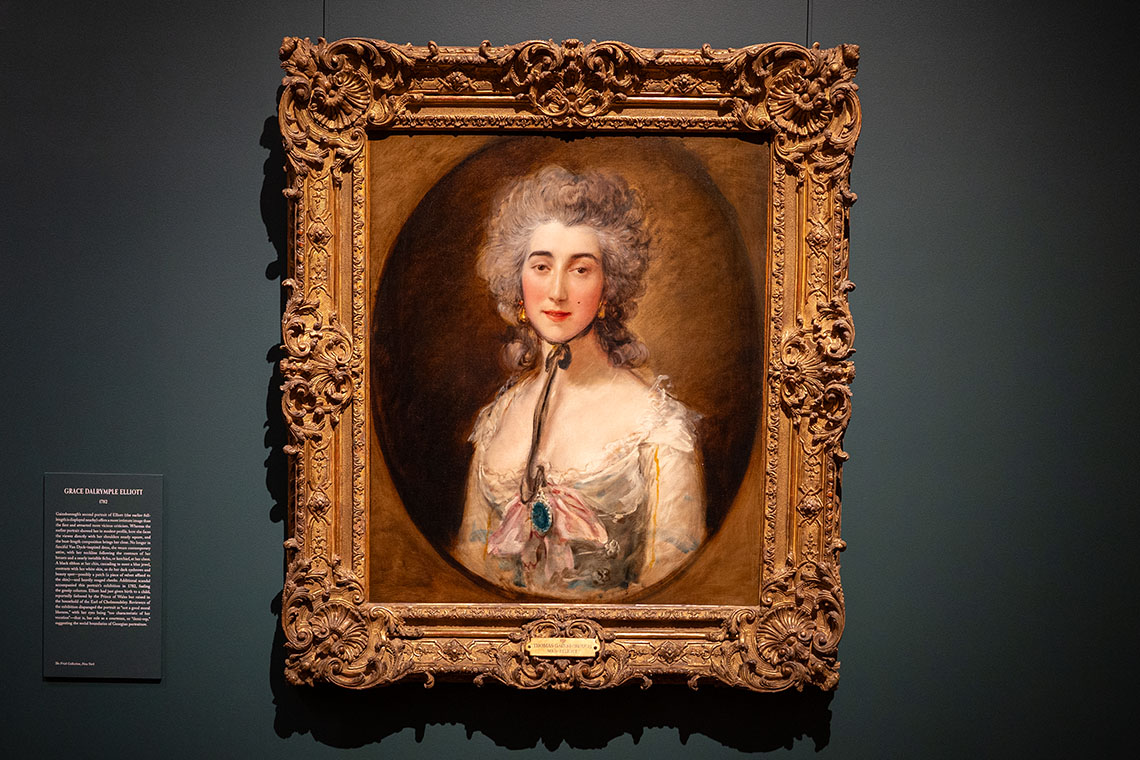
Fashion in portraiture could also provoke scandal. Grace Dalrymple Elliott, a courtesan, first appears modestly in Van Dyck–inspired yellow dress, yet a later, bust-length portrait showing contemporary clothing and a direct gaze provoked outrage for its frankness.
Gainsborough also adapted portraits to remain current. Mrs. Sheridan, once depicted in pastoral costume, was later reworked in contemporary dress, while Mrs. Moody’s originally solo portrait was augmented after her death to include her two young sons. Such adjustments illustrate the interplay of fleeting fashion and enduring familial memory.
Gainsborough: The Fashion of Portraiture is both an exhibition of technical brilliance and a meditation on identity, society, and the fleeting nature of style. Portraits captured a moment in time, yet the lives they record—of musicians, landowners, and innovators like Sancho—endure, offering a window into a world where fashion, power, and artistry intersected.