































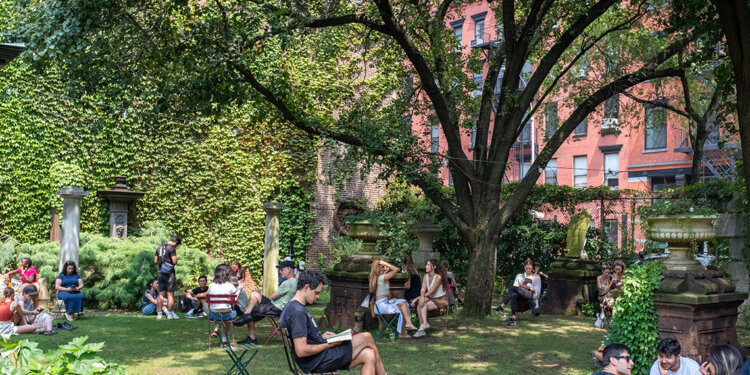
Late last autumn, near the quiet cobbled streets of Nolita, the future of the Elizabeth Street Garden, a small but fiercely cherished patch of green, seemed all but sealed. City planners had earmarked the one acre sculpture garden as the site for a new senior housing project, a plan born from the city’s urgent need to expand affordable housing in Lower Manhattan. The announced project would have delivered 123 affordable apartments for seniors, including some for formerly homeless adults, while preserving a small portion of the garden’s open space as a courtyard.
The plan revived long simmering tensions in the neighborhood over housing and public green space. Then in mid-2025 everything changed.
The Outgoing Mayor’s Last Minute Reversal
Under outgoing mayor Eric Adams, City Hall pivoted. In June 2025 Adams announced an agreement with district council member Christopher Marte to permanently pause the garden’s redevelopment. In exchange, the city committed to producing more than 620 affordable homes across three alternate nearby sites, significantly more than the 123 planned for the garden itself while preserving the garden for public use.
A few months later, just before leaving office, Adams took a more aggressive step. He directed the transfer of Elizabeth Street Garden into the hands of the city’s Parks Department and declared it official parkland. The effect: any future development to build housing on the site would now require state level approval, a steep and unlikely hurdle. The move effectively rendered the garden off limits to the incoming administration’s housing plans.
In a statement defending the move, Adams asserted he was protecting legacy and honoring promises he had made to preserve the community’s green space while continuing to support affordable housing citywide.
For many in the neighborhood, this felt like a rare moment of clarity: a decision that did not trade green space for housing, but found a compromise that seemed, at least on paper, equitable to both needs.
A Garden, Not a Building: The Residents’ Relief
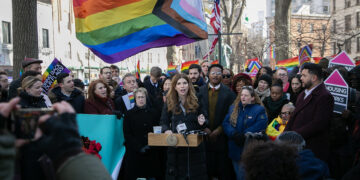
For longtime Nolita residents, the announcement was met with relief. The garden has provided a rare, accessible green refuge in a neighborhood with few public open spots. As one resident told a local reporter: the city is short of parks, and losing this one would have meant losing a “home away from home” for families, older residents, and local children.
Another especially poignant voice came from an older supporter of the original senior-housing plan. While acknowledging the acute need for affordable and supportive housing in Lower Manhattan, that person conceded that housing should not come “at the cost of eliminating what little public green space we have.”
The compromise seemed to promise both more housing overall and preservation of a beloved community asset. On paper those numbers looked impressive, more housing units, preservation of parkland, and nods to both seniors and longtime locals.
But by late November 2025, only weeks before the incoming administration is sworn in, the political stakes surrounding the garden shifted again.
The New Mayor’s Agenda and a Garden in Jeopardy
The city’s voters chose Zohran Mamdani as mayor in November 2025. His platform was built heavily on housing affordability. He pledged a rent freeze, a massive expansion of affordable housing, and use of city owned land to meet urgent housing demand.
Housing advocates and many of his supporters hoped that Elizabeth Street Garden might finally yield to housing, perhaps senior housing, or mixed income apartments given how hard it is elsewhere to find empty, publicly owned lots big enough for significant new developments. For them, converting a rarely used or under-leveraged plot into homes, especially for seniors or people exiting homelessness, seemed like a win.
But Adams’s pre-emptive move to make the garden permanent parkland throws a heavy political and legal shadow over that possibility. As of early December 2025, the incoming mayor himself has conceded that building on the garden will “be nearly impossible.”
Still, Mamdani’s broader housing agenda, including building 200,000 housing units citywide, prioritizing affordability, increasing tenant protections, and reinvesting in underused city owned sites remains central to why many voters supported him.
Who Gains, Who Loses
In this tangled fight over land, legacy, and housing, the winners so far appear clearly drawn.
The Garden and its advocates are winners. A once-private lot is now public, turned over to the Parks Department, protected against redevelopment. For families, seniors, and children in Nolita — in a city where open space remains a rare luxury — that is a tangible victory. The voices who opposed housing on the garden because of the value they placed on community, quiet, light, and open soil have gotten what they asked for.
Housing advocates and many supporters of the new mayor, on the other hand, lost a critical opportunity. The site had represented one of the few remaining easily available parcels of city-owned land where new housing — especially low-income senior or supportive housing — could have been built quickly. With the official parkland designation, that possibility is all but dead. Many feel betrayed, given their support for Mamdani’s broader agenda. On Reddit, some expressed frustration with what they saw as a last-minute maneuver by Adams to undermine the incoming administration’s housing platform.
The city more broadly faces a delayed or diminished return on its housing promises. The housing crisis does not pause because developers or administrations change. The decision to designate Elizabeth Street Garden as a park may have saved one green space, but it closed off one of the most accessible routes to new affordable homes in a neighborhood facing intense demand.
The Fragility of Compromise
It is easy to frame the outcome as a compromise: more housing in alternate sites, preservation of green space, a win for both sides. Under Adams, the city leveraged rezoning and regulatory tools, part of the sweeping policy known as City of Yes for Housing Opportunity, to produce new housing across the five boroughs, with nearly a 23 percent increase in housing permits and thousands of new affordable units in the pipeline.
But for residents around Elizabeth Street Garden, the compromise masked deeper tensions and trade-offs. A garden is not only a patch of soil and plants. It is light and air, quiet and escape. It is a place for children to play, for neighbors to meet, for seniors to rest. For communities squeezed by noise, density, and concrete, that matters. And once that sense of place is lost, or never built, it can rarely be regained.
For advocates of housing and affordability, every acre of publicly owned land feels like gold. At a time when New York City faces a generational housing shortage, each lost parcel is a blow. The parkland designation may temporarily preserve what exists, but it also forecloses a sort of harm that many feel the city must still confront: skyrocketing rents, limited housing supply, and growing homelessness.
The decision reveals how the city’s housing crisis is as much about values as about units. When a mayor chooses green space over apartments, even apartments offered to the elderly for whom stable housing can mean everything, it sends a signal about priorities.
What Comes Next
In the weeks ahead, as the new administration of Zohran Mamdani begins, many eyes will focus on what comes next for affordable housing in Lower Manhattan. The transition team he announced includes more than 400 people across housing, community organizing, and economic development with the intent to move aggressively on many fronts.
Still, with Elizabeth Street Garden now parkland, one of the most straightforward paths toward new housing stock has been blocked. Activists and neighbors alike will watch closely to see whether Mamdani tries to revisit the decision or instead pours energy into other, likely more complex and time consuming, developments across the city.
For now, the garden remains a fragile sanctuary in a city constantly under pressure. Those who walk its paths may breathe easier, but the struggle for housing and for what kind of city New York will become will be determined in the next few months.