









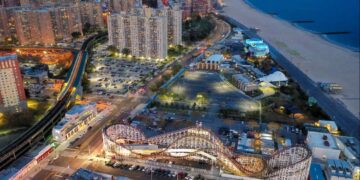
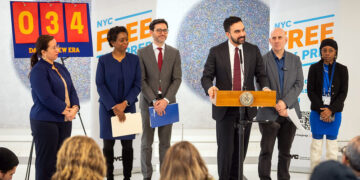





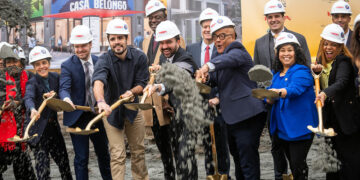































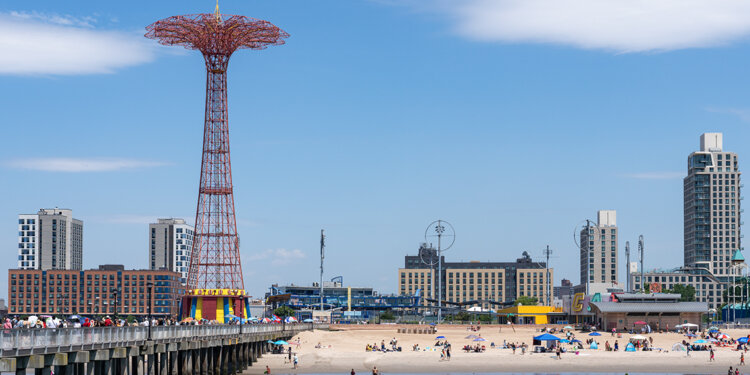
A new era of redevelopment is beginning for Coney Island in Brooklyn as New York City officials unveiled a more than $1 billion investment to rejuvenate the iconic waterfront neighborhood. The announcement, made on December 12, 2025 by Mayor Eric Adams alongside leaders from the New York City Economic Development Corporation and the Department of Parks and Recreation, lays out a comprehensive plan to rebuild infrastructure, add housing and strengthen public spaces that have long defined the community’s character.
At the heart of the investment is a complete reconstruction of the nearly 2.7-mile Riegelmann Boardwalk, the beloved public promenade that has served generations of beachgoers. The century-old structure has deteriorated over time, with rotting planks, uneven decking and structural issues that have made maintenance increasingly difficult. Under the new plan, the boardwalk will be rebuilt from the ground up, elevated in certain areas to address future flood risks and equipped with improved access points, restrooms, lifeguard stations and shade pavilions.
Adjacent to the boardwalk reconstruction is a $42 million renovation of the Abe Stark Sports Center, a community hub with an ice skating rink and recreation space that opened in 1970. The project will modernize the facility, provide a new entrance facing the boardwalk and better integrate the center into the life of the neighborhood.
Housing is another major focus of the investment. The city’s plan calls for 1,500 new mixed-income homes along the waterfront, with 25 percent of units designated as affordable housing. This housing expansion builds on earlier commitments to bolster Coney Island West, where a development team was selected to transform an 80,000 square foot surface parking lot into over 500 mixed income residential units with ground floor retail space.
Improvements to public infrastructure are also included in the investment. The city will upgrade streets, sewers and other essential systems to support both residents and visitors year-round. Extensive public outreach is planned during the boardwalk design and construction process to ensure community involvement and input.
Officials stress that the project’s timeframe will extend over several years. Funding has been earmarked through 2032, and environmental reviews and design phases are expected to continue into 2027 before major construction begins.
Those who stand to benefit most are local residents, small business owners and visitors. Rebuilding the boardwalk and improving public spaces will enhance the neighborhood’s appeal and resilience, particularly as climate change makes coastal protection more urgent. Expanded housing offers long-term residents and newcomers alike more opportunities to live near the waterfront. Retail and recreation upgrades promise a boost to the local economy by drawing year-round activity instead of the seasonal crowds that have long defined Coney Island’s tourism economy.
With its rich history as a playground for New Yorkers and a cultural hub of Brooklyn, Coney Island now looks forward to a revitalized future that does not depend on any casinos.